Egypt Accessible Travel at a Glance
Egypt is best approached as a "hub-and-spoke" destination for wheelchair users. Base in Cairo/Giza for museums and the pyramids, then add a Red Sea resort for lower-friction beach time, or Upper Egypt only if you can tolerate uneven heritage terrain and longer transfers.
For most travelers, the most efficient accessible sequence is Cairo/Giza for 3–4 nights, then Hurghada or Sharm El Sheikh for 3–5 nights. Adding Luxor and Aswan is feasible but increases the operational load sharply.

City-by-City Accessibility Comparison
Cairo and Giza offer the strongest cultural access because they combine international air access, modern hotels, major museums, and workable private touring. Luxor and Aswan are more physically demanding because the reward is archaeological, not urban.
The Red Sea resorts are the easiest places in Egypt for day-to-day movement. They have flatter layouts, newer hotel stock, and better transfer practicality, but sea access still depends heavily on marina design.
| City | Airport accessibility | Pavement quality | Curb cuts | Accessible toilets | Accessible hotel stock | Transfer practicality | Overall wheelchair suitability |
|---|---|---|---|---|---|---|---|
| Cairo | Good at main terminals | 5/10 | 3/10 | 5/10 | 7/10 | 8/10 private | Moderate to Good |
| Giza | Good via Cairo airport | 4/10 | 2/10 | 4/10 | 6/10 | 8/10 private | Moderate |
| Luxor | Moderate | 3/10 | 2/10 | 3/10 | 5/10 | 7/10 private | Moderate to Challenging |
| Aswan | Moderate | 4/10 | 2/10 | 3/10 | 5/10 | 7/10 private | Moderate to Challenging |
| Hurghada | Good | 7/10 | 5/10 | 6/10 | 7/10 | 9/10 private | Good |
| Sharm El Sheikh | Good | 7/10 | 5/10 | 6/10 | 7/10 | 9/10 private | Good |
| Alexandria | Moderate | 4/10 | 3/10 | 4/10 | 5/10 | 7/10 private | Moderate |
| Marsa Alam | Moderate | 6/10 in resorts | 4/10 | 4/10 | 5/10 | 8/10 private | Moderate |
Cairo
Cairo is Egypt's most practical big-city base for wheelchair users because the key wins are concentrated: airport access, international hotel chains, and modern museums. The weakness is the public realm — broken pavements, parked cars on sidewalks, and inconsistent curb cuts mean independent street mobility is limited.
For wheelchair users, Cairo works best as a vehicle-based city. Plan door-to-door private touring rather than walking between attractions.
Giza
Giza is operationally easier than central Cairo if your priority is the pyramids, GEM, and hotel downtime. However, the plateau itself is not independently navigable for most wheelchair users because the terrain shifts from paved access points to sand, rock, and rough stone.
Choose a hotel with step-free entrance, lift-confirmed room access, and a vehicle that can reposition across the plateau. That combination changes the day from exhausting to realistic.
Luxor
Luxor delivers world-class archaeology but below-average physical access. Temple forecourts and museum spaces can be manageable, but tomb zones, parking distances, and worn stone surfaces raise the physical load quickly.
Most wheelchair travelers should reduce their site count in Luxor by 30–50% compared with standard itineraries. Two major visits per day is usually the right pace.
Aswan
Aswan is calmer than Cairo and less chaotic than Luxor, but island sites, marina boarding, and long lakeside exposures create their own challenges. Philae and Abu Simbel are possible with planning, but both require strong transport control and realistic expectations.
Aswan rewards slow travel. A 2-night minimum is better than a rushed overnight.
Hurghada
Hurghada is one of Egypt's easiest wheelchair bases because resort roads are flatter, hotel compounds are newer, and private transfers are straightforward. The main barrier is not urban movement but boat boarding, where marina ramps and gangway angles vary hour by hour.
For travelers with limited transfer ability, Hurghada is stronger for promenade time, private city touring, beach hotels, and glass-bottom boats than for standard shared snorkeling boats. Local insight: the New Marina area in Hurghada has noticeably better paved access between berths than the Old Marina, and several operators there pre-brief their crew on wheelchair boarding — something worth asking about specifically when booking snorkeling tours in Hurghada.
Sharm El Sheikh
Sharm is similar to Hurghada in overall suitability, with an added advantage in some modern resort zones and marinas. The trade-off is that several coastal access points rely on jetties and floating pontoons, which can be a poor fit for manual or powered wheelchair users.
Sharm works best when the hotel itself is the destination. Pick a compact resort layout rather than a sprawling hillside property.
Alexandria
Alexandria is culturally rewarding but physically inconsistent. The seafront can be pleasant in parts, yet older districts, curb heights, and patchy pavement maintenance reduce independent movement.
The Bibliotheca Alexandrina is the city's strongest wheelchair-friendly anchor. Pair it with a private transfer day from Cairo or a short, tightly managed overnight stay.
Marsa Alam
Marsa Alam's resort infrastructure is calmer than its urban infrastructure. Within selected hotels, movement can be manageable; outside them, distance, heat, and dispersed development reduce flexibility.
It suits travelers who want resort-based rest rather than multi-stop sightseeing. Sea access should be checked property by property, not destination by destination.
Major Attractions and Wheelchair Access
Access in Egypt is rarely a simple yes or no. A more accurate framework is: how much support, surface tolerance, and time buffer does this site require?
The table below reflects practical wheelchair usability rather than brochure-level access claims.
| Site | Wheelchair access status | Ramp availability | Surface type | Approx. unavoidable stairs | Companion strongly recommended | Practical notes |
|---|---|---|---|---|---|---|
| Pyramids of Giza Plateau | Partial | Limited at selected areas | Mixed asphalt, stone, sand | 0 outside main viewpoints | Yes | Exterior views realistic; interior pyramid visits not realistic for most users |
| Grand Egyptian Museum | Good | Yes | Smooth indoor flooring | 0 | Helpful, not essential for many | Lifts, accessible toilets, wheelchairs, golf carts, free admission for visitors with disabilities (GEM, 2026) |
| Egyptian Museum Cairo | Partial | Limited | Older floors, some uneven thresholds | 5–20 depending on route | Yes | Historic building, tighter circulation than GEM |
| Luxor Temple | Partial | Limited | Uneven ancient stone | 2–8 depending on entry route | Yes | Best in cooler hours with private drop-off |
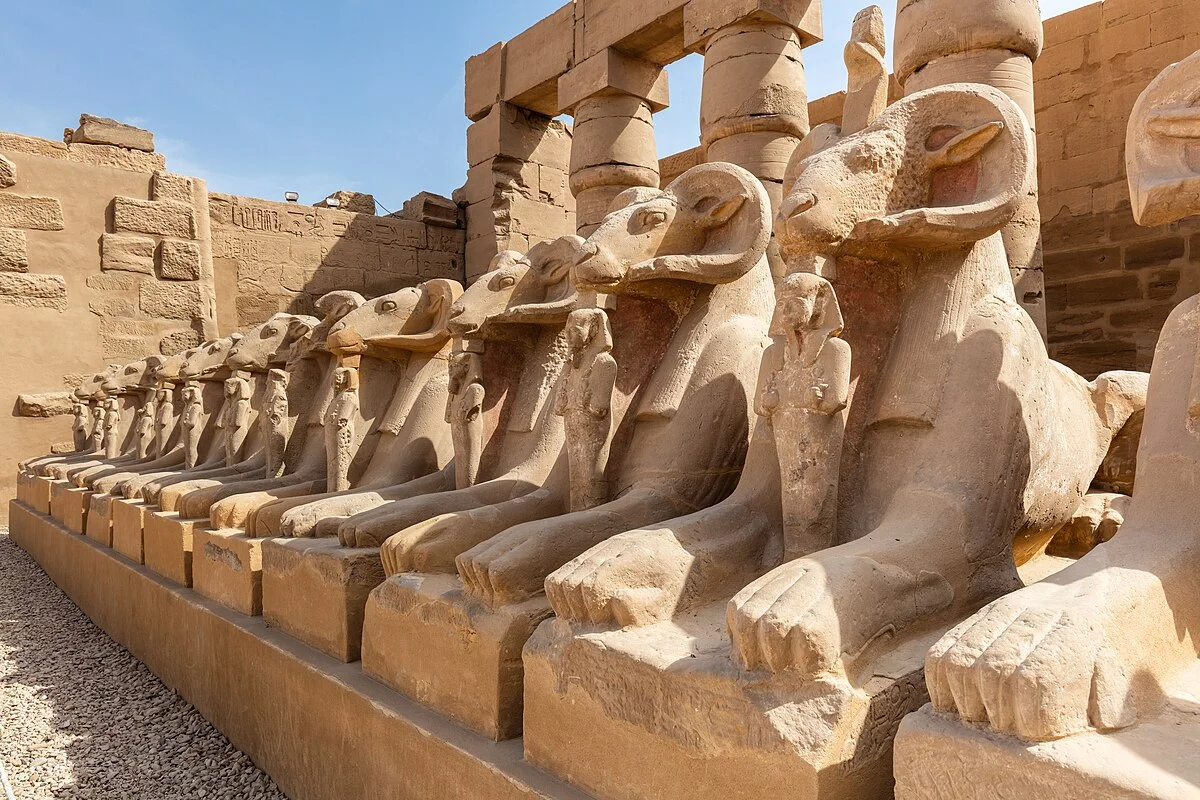
| Karnak Temple | Partial | Limited | Broad stone paths, uneven joints | 0–6 | Yes | Large distances inside site create fatigue |
| Valley of the Kings | Difficult | Minimal | Sloped paved sections plus rough approaches | 20+ for tomb interiors | Yes | Exterior area possible; tomb interiors usually not recommended |
| Abu Simbel | Partial to Difficult | Limited | Paved forecourt, sloped approaches | 10+ inside temples | Yes | Early visit essential due to heat and crowd load |
| Philae Temple | Partial to Difficult | Limited | Boat transfer plus stone paving | 5–15 depending on route | Yes | Main challenge is boat boarding, not just temple access |
| Alexandria Library | Good | Yes | Smooth modern flooring | 0 | No for many users | One of Egypt's easiest cultural visits |
| Hurghada Marina / New Marina areas | Partial | Variable | Paving, marina ramps | 0–4 | Yes for boat boarding | Boarding angle changes with tide and vessel height |
| Sharm marinas | Partial | Variable | Paving, floating pontoons, jetties | 0–6 | Yes | Better for ambulatory travelers than full-time chair users |
| El Gouna marinas | Partial to Good | Variable | Resort paving | 0–4 | Yes | Cleaner layouts and shorter transfer distances than many ports |

Site Difficulty Ratings
Difficulty in Egypt is driven by five variables: terrain, slope, heat, distance from parking, and toilet availability. A site can be culturally "easy" but physically "challenging" if these combine badly.
| Site / Experience | Difficulty | Main reason |
|---|---|---|
| Grand Egyptian Museum | Easy | Modern layout, lifts, accessible toilets, wheelchairs, smoother surfaces |
| Alexandria Library | Easy | Modern building, ramps and lifts, predictable circulation |
| Private Cairo city tour | Easy to Moderate | Vehicle-based day minimizes pavement exposure |
| Egyptian Museum Cairo | Moderate | Older layout, tighter turns, thresholds, crowding |
| Luxor Temple | Moderate | Uneven stone and heat, but manageable exterior route |
| Karnak Temple | Moderate | Long distances and worn paving |
| Giza Plateau viewpoints | Moderate to Challenging | Sand, rough stone, parking-to-viewpoint gaps |
| Philae Temple | Challenging | Boat boarding plus temple surfaces |
| Abu Simbel | Challenging | Heat exposure, long approach, stairs inside |
| Valley of the Kings exterior area | Challenging | Slopes, limited shade, long distances |
| Valley of the Kings tomb interiors | Not Recommended | Stairs, narrow passages, steep ramps, heat |
| Desert safari | Not Recommended | Vehicle transfer style, sand, toilet absence |
| Standard snorkel boat trip | Not Recommended | Marina boarding, deck mobility, ladder water entry |
Which Experiences Are Realistically Wheelchair-Friendly?
Museum visits are the strongest category in Egypt because access is most predictable. Modern museums and a few larger heritage museums allow wheelchair users to experience major collections without the terrain volatility of open archaeological sites.
Private city tours are the next-best format because the vehicle acts as your access infrastructure. When timed properly, they reduce queue time, parking distance, and unnecessary pavement exposure.
Usually Wheelchair-Friendly
- Grand Egyptian Museum
- Alexandria Library
- National Museum of Egyptian Civilization
- Private Cairo and Giza touring
- Selected resort beach days with short internal buggy transfers
- Glass-bottom boat trips with confirmed boarding help
- Step-free hotel stays in newer Red Sea resorts
- Evening marina promenades in selected resort zones
Possible With Planning and Support
- Pyramids of Giza exterior viewpoints
- Luxor Temple
- Karnak Temple
- Philae Temple
- Abu Simbel exterior and forecourt
- Selected Nile cruises with strong companion support
- Mosque courtyards where staff can guide alternative access
- Private beach clubs with matting or staff carrying chairs
Difficult or Poor Value Without Specialist Support
- Valley of the Kings tomb interiors
- Most tomb interiors in Luxor and Saqqara
- Desert safaris
- Camel and quad experiences
- Shared snorkeling boats
- Diving boats without prior transfer planning
- Public ferries to heritage islands
- Historic street walking tours in old quarters

Transfer and Travel Logistics Between Major Hubs
Transfer practicality matters more than distance in Egypt. The best route on paper is not always the best route for a wheelchair user; vehicle type, rest-stop quality, and boarding friction often matter more.
| Route | Distance | Average drive time | Typical domestic flight time | Best option for wheelchair users | Notes |
|---|---|---|---|---|---|
| Cairo–Giza | 18 km | 45–75 min | N/A | Private adapted/private van | Traffic variability matters more than distance |
| Cairo–Alexandria | 220 km | 2 hr 45 min–3 hr 30 min | N/A | Private van | Best with one accessible hotel or museum stop |
| Hurghada–Luxor | 290 km | 4 hr–4 hr 30 min | N/A | Private van | Standard coaches add fatigue and timing rigidity |
| Aswan–Abu Simbel | 280 km one way | 3 hr–3 hr 30 min | 45 min | Private van or short flight | Road trip needs very early departure |
| Cairo–Sharm El Sheikh | 500 km | 6 hr–7 hr | 1 hr | Flight plus private transfer | Road useful only if heavily budget-driven |
| Hurghada–Marsa Alam | 290 km | 3 hr–3 hr 30 min | N/A | Private van | Straightforward resort-to-resort transfer |
2025/2026 Pricing for Accessible Travel in Egypt
Real pricing in Egypt depends more on service format than disability label. Most suppliers do not publish dedicated "accessible" rates; the price difference usually comes from private logistics, larger vehicles, additional staffing, and slower pacing.
The figures below are realistic retail planning ranges for 2025/2026 independent travelers booking privately.
| Service | Typical 2025/2026 price | Currency | Notes |
|---|---|---|---|
| Accessible/private airport transfer Cairo airport to Giza | €52 | EUR | Ramp/lift vehicles limited; most quotes are for spacious private van plus manual assistance |
| Accessible/private airport transfer Hurghada airport to hotel zone | €32 | EUR | Resort corridor transfers are simpler and cheaper |
| Private wheelchair-friendly Cairo/Giza day tour | €138 | EUR | Vehicle, driver, guide; excludes entries |
| Private wheelchair-friendly Luxor day tour | €150 | EUR | Higher due to distances and slower site handling |
| Private guide plus assistant for 1 day | €105 | EUR | Useful at archaeology-heavy sites |
| Accessible 4-star hotel night | €115 | EUR | Real accessible room stock limited |
| Accessible 5-star hotel night | €235 | EUR | Best odds in Cairo and Red Sea chains |
| Manual wheelchair rental per day | €22 | EUR | Availability should be confirmed in advance |
| Beach wheelchair day use | €18 | EUR | Often free if hotel-owned, paid if outsourced |
| Private glass-bottom boat with assistance | €135 | EUR | Depends on marina and duration |
| Companion support staff for half day | €52 | EUR | Non-medical assistance |
Official Entry Prices for Key Sites
The Ministry of Tourism and Antiquities ticket sheet remains the best public baseline for archaeological pricing, though some flagship sites have separate ticketing systems. Foreign adult rates below use the official ministry document where available, with GEM handled separately through its official ticketing platform (Ministry of Tourism and Antiquities, last updated January 2024; GEM official ticketing, 2026).
| Attraction | Foreign adult ticket | Foreign student ticket | Currency | Source note |
|---|---|---|---|---|
| Egyptian Museum Cairo | 550 | 275 | EGP | Official egymonuments pricing |
| Pyramids of Giza plateau | 540 | 270 | EGP | Ministry of Tourism and Antiquities ticket list |
| Khufu Pyramid interior | 900 | 450 | EGP | Ministry of Tourism and Antiquities ticket list |
| Karnak Temples | 600 | 300 | EGP | Ministry of Tourism and Antiquities ticket list |
| Luxor Temple | 500 | 250 | EGP | Ministry of Tourism and Antiquities ticket list |
| Valley of the Kings | 750 | 375 | EGP | Ministry of Tourism and Antiquities ticket list |
| Abu Simbel Temples | 600 | 300 | EGP | Ministry of Tourism and Antiquities ticket list |
| Temple of Philae | 450 | 230 | EGP | Ministry of Tourism and Antiquities ticket list |
| Hurghada Museum | 200 | 100 | EGP | Ministry of Tourism and Antiquities ticket list |
| Sharm el-Sheikh Museum | 200 | 100 | EGP | Ministry of Tourism and Antiquities ticket list |
| Grand Egyptian Museum | Ticketed separately | Ticketed separately | EGP | Official GEM platform; visitors with disabilities admitted free (GEM, 2026) |
Accommodation Accessibility Standards in Egypt
In Egypt, "accessible room" often means only one of three things: ground-floor placement, proximity to the lift, or a larger bathroom. It does not automatically mean roll-in shower, compliant doorway width, or turning radius for a powered chair.
This gap matters more than star rating. A 4-star chain property can outperform a 5-star resort if the accessible room is genuinely designed rather than improvised.
Minimum Standards to Confirm Before Booking
- Doorway width: ask for the narrowest clear opening in centimeters; 80 cm is usable for many manual chairs, 90 cm is safer for powered chairs.
- Bathroom door width: often narrower than the room entry.
- Roll-in shower: ask if there is zero lip or a lip under 2 cm.
- Grab bars: ask about side and rear placement, not just "available."
- Toilet transfer space: confirm at least one side clearance.
- Lift size: ask cabin depth and door width if using a powered chair.
- Restaurant access: confirm step-free route from room to breakfast.
- Pool access: ask specifically about pool hoist, not just "pool access."
- Beach access: ask if there is a beach wheelchair, matting, or buggy.
- Balcony threshold: ask for exact height; 3–8 cm is common.
- Bed height: useful if lateral transfers are difficult.
- Emergency evacuation: ask how staff handle wheelchair users in a fire alarm.
Ground-Floor Room vs True Accessible Room
A ground-floor room solves only one problem: stairs. It does not solve bathroom transfer space, shower entry, lift dependency for restaurants, or whether the promenade, pool, and beach are reachable.
A true accessible room should combine step-free entry, suitable door widths, accessible bathroom layout, and independent access to the hotel's main public areas. If one of those is missing, the room is only partially accessible.
Red Sea Accessibility Comparison
The Red Sea is Egypt's strongest region for low-friction wheelchair travel because modern resort planning beats historical urban fabric. The detail that matters most is not the destination name but the relationship between room, restaurant, pool, beach, and marina.
Compact layouts beat scenic sprawl. A beautiful hillside resort with 1.2 km of internal distances is a poor choice for many wheelchair users, even if the room itself is accessible.
| Area | Marina boarding conditions | Jetty access | Beach gradient | Hotel layout spread | Best for limited transfer ability | Notes |
|---|---|---|---|---|---|---|
| Hurghada | Variable, often busy | Mixed | Moderate | Mixed | Moderate | Good hotel choice matters more than district |
| El Gouna | Generally better organized | Better than average | Mild to moderate | Compact to medium | Good | Cleaner resort planning, easier promenade movement |
| Sahl Hasheesh | Limited marina focus | Limited | Mild | Long but smooth promenades | Good | Strong for resort-based stays |
| Makadi Bay | Limited marina use | Mostly jetty-dependent reefs | Moderate | Large compounds | Moderate | Fine for hotel stays, weaker for sea boarding |
| Soma Bay | Better managed private infrastructure | Mixed | Mild | Spread out | Good | Stronger if hotel buggy support is reliable |
| Sharm El Sheikh | Good marinas but many jetties | Often difficult | Moderate | Mixed to large | Moderate | Sea entry often harder than hotel movement |
| Marsa Alam | Often jetty-based reefs | Frequently difficult | Mild to moderate | Very spread out | Low to Moderate | Best for resort rest, not active sea days |
Best Red Sea Choices by Traveler Type
For travelers who can self-transfer or stand briefly with support, El Gouna and Soma Bay usually offer the cleanest operational experience. Their internal resort planning is often easier than older, more congested zones.
For full-time wheelchair users with limited transfer ability, Sahl Hasheesh and selected Hurghada resorts are often better than reef-heavy Marsa Alam properties. The reason is simple: the experience is more promenade and beach-chair based, less jetty-dependent.
When You Need a Private Tour Instead of a Group Tour
In Egypt, private touring is often an accessibility requirement rather than a luxury. Standard coach products are built around volume, fixed parking, and fast group turnover, which clashes with wheelchair boarding, slower site entry, and toilet needs.
Use a private tour if any of the following apply:
- You use a powered wheelchair.
- You need ramp or lift loading.
- You need more than 10 minutes for transfers.
- You need accessible toilet planning.
- You want to visit Giza, Luxor, Karnak, or Abu Simbel without rushing.
- You need to avoid standard coach parking areas.
- You travel with medical equipment or large chair batteries.
Where Group Tours Fail Most Often
- Museum entry queues: groups wait together; private guides can choose timing and ticket flow.
- Uneven temple stones: group pacing is too fast for safe chair movement.
- Marina gangways: crew may help, but group departures do not wait long.
- Public toilets: coaches stop where they stop, not where access is best.
- Standard coaches: luggage holds and boarding steps are not wheelchair-friendly.
- Time loss: groups can waste 30–60 minutes simply assembling, loading, and reloading.
Local Insight
On-the-ground access in Egypt is less about formal policy and more about real-time improvisation. Temporary ramps appear and disappear, security lanes shift, one entrance may be step-free while another has a 12 cm lip, and marina staff may solve in 2 minutes what a booking form never mentioned.
Three realities surprise most travelers:
- Security screening can become the main bottleneck, especially at major museums and archaeological entrances. A private guide who moves early can save 20–40 minutes.
- Curb height variance is extreme. On one street you may have a usable dropped curb every 80 meters; on the next, none for 300 meters.
- Marina crew culture is usually helpful, but assistance is person-dependent, not systemized. Good operators pre-brief the crew; weak ones improvise at boarding.
- At Hurghada's New Marina, the best boarding window for wheelchair users is between 7:30 am and 8:15 am, before the main group departures begin and while gangway angles are still favorable with the morning tide. By 9:00 am, congestion and vessel movement make boarding noticeably harder.
- Several Hurghada-based operators have begun offering a dedicated "slow boarding" protocol on glass-bottom boats, where the crew clears the gangway, positions a portable step-bridge, and allows 10–15 minutes for boarding before other passengers embark. This is not advertised publicly — you have to ask for it by name when booking snorkeling tours in Hurghada.
Practical Local Operating Tips
- Start archaeological days at 6:00–7:30 am in Luxor and Aswan.
- Keep one empty day or half-day after intercity transfers.
- Carry a toilet kit; accessible public toilets are inconsistent outside flagship sites.
- Use gloves for self-propelling on rough stone and long ramps.
- Bring a spare joystick cover or rain guard for powered chairs near marinas.
- Avoid Friday noon windows near mosques and busy urban roads.
- Ask hotels for service-entrance alternatives; they are often smoother than the main decorative entrance.
- In resort towns, request buggy support in advance, not at the lobby.
Climate and Seasonal Realities
Heat affects accessibility in Egypt more than many travelers expect. High temperatures increase upper-body fatigue for manual wheelchair users, reduce comfort during transfers, and can shorten powered wheelchair battery performance, especially on long outdoor days.
Upper Egypt is the hardest zone in summer. Luxor and Aswan regularly reach the low-to-mid 40s°C in peak season, while Cairo remains hot but more manageable and the Red Sea benefits slightly from coastal moderation.
| Month | Cairo avg high / low °C | Luxor/Aswan avg high / low °C | Red Sea coast avg high / low °C |
|---|---|---|---|
| Jan | 19 / 9 | 23 / 8 | 22 / 12 |
| Feb | 21 / 10 | 26 / 10 | 23 / 13 |
| Mar | 24 / 12 | 31 / 15 | 26 / 16 |
| Apr | 29 / 15 | 36 / 20 | 30 / 20 |
| May | 33 / 19 | 40 / 24 | 34 / 24 |
| Jun | 35 / 22 | 42 / 27 | 37 / 27 |
| Jul | 36 / 23 | 42 / 28 | 38 / 28 |
| Aug | 35 / 23 | 42 / 28 | 38 / 28 |
| Sep | 33 / 21 | 39 / 25 | 35 / 26 |
| Oct | 30 / 18 | 35 / 20 | 32 / 23 |
| Nov | 25 / 14 | 29 / 14 | 28 / 18 |
| Dec | 21 / 10 | 24 / 9 | 24 / 14 |
These figures are synthesized from current Egypt climate datasets for Cairo, Luxor, Hurghada, Sharm El Sheikh, and Marsa Alam (Climate-Data.org; Climates to Travel, 2026). For wheelchair users, the practical conclusion is clear: October to April is the best window for archaeology-heavy itineraries, while May to September is better reserved for resort-focused travel with early starts.
How Heat Changes Access
- Manual wheelchair propulsion becomes significantly harder above 32°C.
- Dark stone at temples radiates heat upward, increasing perceived temperature.
- Powered chairs can lose effective range in prolonged high heat.
- Seat cushions, metal push rims, and armrests heat up quickly in direct sun.
- Midday transfer waiting is often the most exhausting part of the day.
What to Ask Before Booking
The quality of an Egypt accessible trip depends on operator-level detail. Ask exact operational questions, not broad questions like "Is it wheelchair-friendly?"
- What vehicle will be used: sedan, standard van, ramp van, or lift van?
- Is the ramp manual or electric, and what is its weight limit?
- What is the internal door height of the vehicle?
- Can a folded wheelchair be stored without occupying a passenger seat?