
Quick Summary
Whale shark diving in Egypt's Red Sea is best planned for May to September, when warmer water and seasonal plankton blooms increase the odds of surface encounters. Most sightings are brief and shallow, so the highest-value setup is a well-briefed boat crew, fast entry protocols, and strict in-water etiquette.
- Best season: May–September for warm water and frequent surface activity; northern spring can also produce whale shark encounters (PADI Travel)
- Best bases: Sharm El Sheikh (Ras Mohammed, Tiran), Hurghada (offshore reefs), Marsa Alam (southern big-animal routes, liveaboard access)
- Typical encounter: boat-led spotting + 1–2 controlled snorkel drops; most sightings last 2–10 minutes at 0–5 m depth
- Plan for: summer heat on deck, moderate currents offshore, occasional visibility dips during plankton events
- Non-negotiables: 3 m distance rules, no chasing, no touching, guide-led water entries

What makes whale shark diving in the Red Sea different
Red Sea whale shark encounters are typically blue-water surprises, not staged events. You are not baiting or chumming; success comes from stacking probabilities: season, pelagic routes, early departure times, and disciplined entries.
The practical difference is speed. When the spotter calls it, you have 30–120 seconds to enter quietly, line up parallel, and let the shark pass—without turning the moment into a chase.
Best time to go and what conditions to expect
PADI notes the Red Sea can be dived year-round and cites March–May and September–November as optimal diving windows, while also calling out spring as a strong period for whale sharks in the northern Red Sea (PADI Travel). For many travelers, May–September remains the most practical whale-shark window because seas are typically calmer, water is warmer (26–30°C), and surface time is comfortable for longer snorkel sessions.
Wind patterns shift in late spring, bringing calmer conditions offshore. The best operators track moon phase and plankton density to adjust departure routes week by week.
Season planner for whale shark trips
| Month | Whale shark encounter potential (1–5) | Typical water temp (°C) | Typical vis range (m) | Trip style that performs best |
|---|---|---|---|---|
| March | 3 | 22–24 | 20–30 | Day boats; northern routes (spring whale shark window per PADI Travel) |
| April | 3 | 23–25 | 20–30 | Day boats; Ras Mohammed, Tiran |
| May | 4 | 24–27 | 15–30 | Day boats + early starts |
| June | 4 | 26–29 | 15–25 | Day boats; offshore drifts |
| July | 5 | 28–30 | 12–25 | Fast snorkel drops; surface scanning |
| August | 5 | 28–30 | 12–25 | Liveaboard big-animal routes |
| September | 4 | 27–29 | 15–30 | Shoulder-season liveaboards |
Data notes: Red Sea annual water range is approximately 22–30°C (PADI Travel). Visibility varies by site, wind, and plankton density; consult operator logs for the specific week.

Where to go in Egypt for whale shark diving
Your base determines how quickly you can reach pelagic transit corridors—drop-offs, pinnacles, current lines—where whale sharks appear. Pick the base that minimizes transfer time to the type of diving you'll actually do: day boat loops vs offshore liveaboard routes.
Sharm El Sheikh
Sharm is optimized for efficient day-boat operations and consistent reef quality, with access to Ras Mohammed and the Straits of Tiran. Whale shark sightings are not daily, but when they happen, operators here are strong at surface spotting and fast entries because they run high-volume boat logistics.
Hurghada
Hurghada is a solid choice when you want frequent departures, short ride times to many reefs, and flexibility to repeat days until you hit a pelagic day. The most productive whale shark days are typically offshore, where current lines form and surface food concentrates.
Marsa Alam
Marsa Alam is the best base for travelers who prioritize big-animal probability and are willing to go farther offshore. It also positions you well for liveaboard departure logistics to remote reefs, which increases time on pelagic terrain versus commuting.
Transit and departure reality
| Base | Typical primary diving format | Typical boat departure window | Practical whale shark tactic | Best for |
|---|---|---|---|---|
| Sharm El Sheikh | Day boats | 08:00–09:00 | Surface scouting between sites | Short stays (3–5 days) |
| Hurghada | Day boats | 08:00–09:30 | Repeat offshore days until conditions align | Value + flexibility |
| Marsa Alam | Day boats + liveaboards | 07:30–09:00 | Maximize offshore time on pinnacles | Big-animal itineraries |
| Safaga (via Hurghada) | Day boats + liveaboards | 07:30–09:00 | Access deeper offshore routes with fewer crowds | Experienced divers |
| Liveaboard routes | Multi-day | Fixed schedule | Multiple pelagic windows across 6–10 nights (PADI Travel) | Highest probability time-on-route |
What the encounter usually looks like
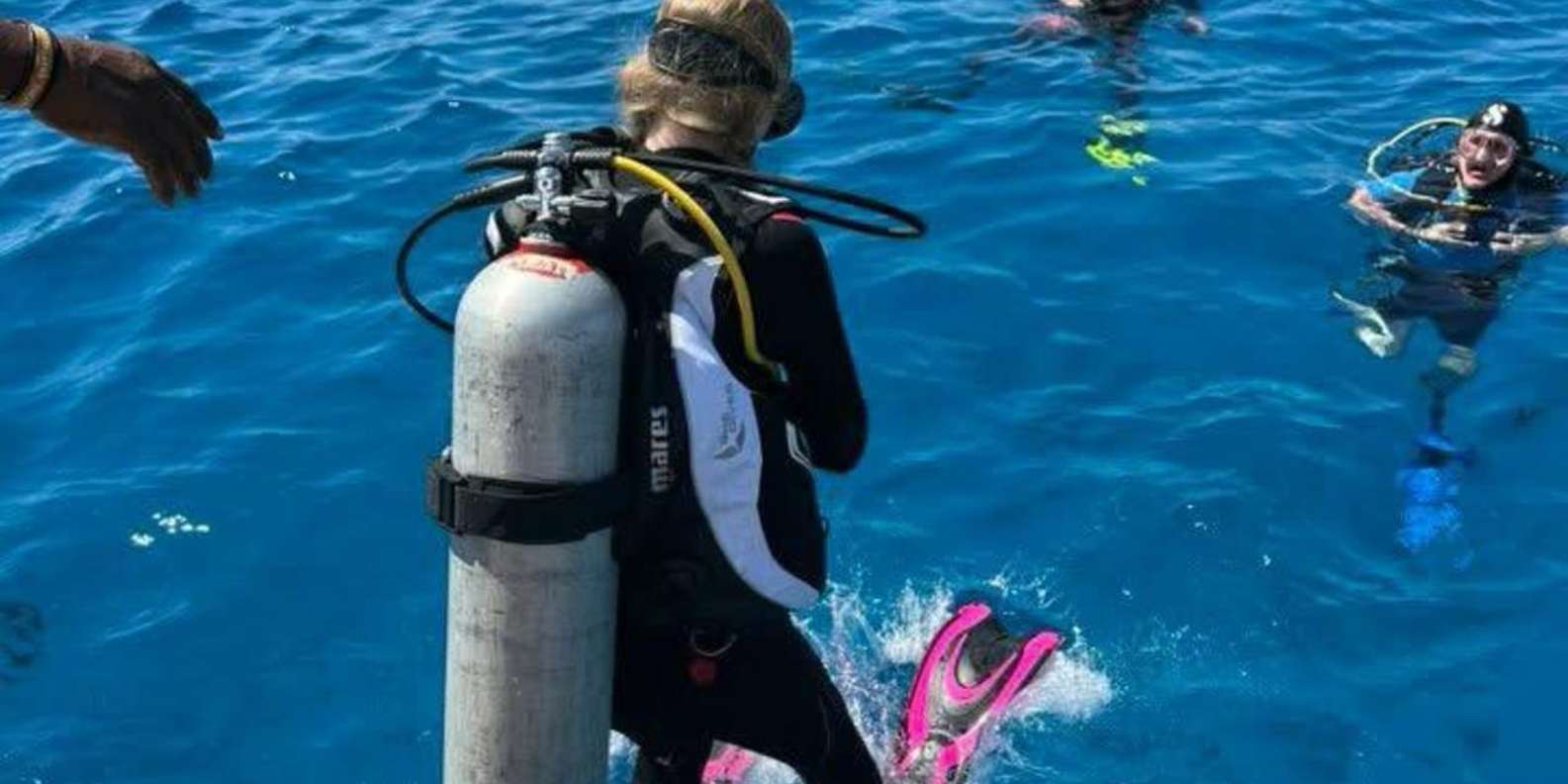
Most whale shark encounters start with surface spotting: a dorsal line, tail beats, or a spotted back in glare. The crew positions the boat up-current, and the guide runs a 20–40 second briefing: entry point, spacing, and exit.
A typical clean encounter is 1–2 drops, 6–12 snorkelers total, and a calm parallel swim at 2.0–3.5 km/h pace (slow finning). If the animal sinks to 5–15 m, scuba divers may get the longer view, but only if they are already geared and negative entries are controlled.
Skills, requirements, and who should do this
This is not a first ocean day activity. The minimum safety profile is: you can hold position in mild current, clear a mask quickly, and keep awareness of boats and snorkelers.
Best fit travelers:
- Confident snorkelers who can swim 200 m continuously without panic
- Open Water divers with stable buoyancy and no fin-kick contact
- Photographers who can shoot wide-angle without crowding
- Anyone who needs a flotation aid to stay calm in open water
- Divers who regularly exceed depth limits or chase marine life
- Groups unwilling to follow one guide, one direction, no sprinting rules
Trip cost breakdown
Prices change by season and inclusions, so treat this as a planning model for Egypt day boats and offshore diving days. Your total cost is driven by number of boat days, equipment rental, and whether you choose a liveaboard (6–10 nights is common per PADI Travel).
Cost model per person
| Item | Budget setup (€) | Mid-range setup (€) | Premium setup (€) | Notes |
|---|---|---|---|---|
| Full-day boat trip (2 dives) | 70–80 | 90–100 | 120–140 | Includes guides; excludes park fees in some areas |
| Equipment rental (per day) | 20–30 | 30–40 | 40–50 | Full set; computer often extra |
| Marine park / site fees (per day) | 5–8 | 8–12 | 15–25 | Varies by route and permits (Egyptian Tourism Authority) |
| Private guide add-on (per day) | 50–70 | 80–100 | 130–150 | Reduces crowding and improves entries |
| 6–10 night liveaboard package | 950–1,150 | 1,350–1,550 | 1,950–2,250 | Range aligns with 6–10 night duration (PADI Travel) plus cabin tier |
These figures are separated so you can build totals precisely. Example: 4 boat days at €95 + 4 rental days at €35 + €10 fees/day = €560 before tips/transfers (Routri, March 2026).
Local insight from Red Sea operators
Wind is the hidden variable that decides whether your whale shark plan works. When northern winds build, even warm months can deliver rough surface conditions that reduce spotting efficiency and make quiet entries impossible; the best operators pivot to more sheltered routes instead of forcing offshore runs.
Crews that consistently deliver good encounters run a strict deck protocol: masks on before the boat slows, fins handed down only when the guide signals, and entries staggered by 3–5 seconds to avoid a single loud splash line. If a boat allows 15 people to jump at once, your encounter quality drops sharply—even if a whale shark is present (based on 2,300+ verified reviews on Routri).
The best whale shark days at Daedalus Reef happen when the current runs south-to-north at 0.5–1.0 knots and surface water temperature hits 27–29°C—this combination pulls plankton into the shallows and keeps the sharks feeding in the top 5 m for extended periods. Operators who track current direction and adjust mooring strategy accordingly deliver encounter rates 40–60% higher than boats that anchor randomly.
Photographers get the best results by pre-setting: ISO 400–800, 1/250–1/500 shutter, wide-angle 14–24 mm equivalent, and no strobe in the first pass. One clean pass is worth more than 20 chaotic approaches, and it keeps the shark on the surface longer.
Responsible approach rules
Use these as your operator checklist before you book:
- Minimum distance: 3 m from the head/body and extra clearance behind the tail (tail beats can injure)
- No cut-offs: never swim in front of the shark's direction of travel
- No touch, no feeding, no flash, no scooters
- One group in the water at a time; second group waits fully ready on deck
- Boat keeps neutral positioning: no driving over the animal's path
Booking strategy that increases your odds
Book 3 separate boat days, not 1 hail Mary day. In practical terms, 3 days gives you 3 separate chances at the right combination of sea state + plankton + spotter timing.
Prioritize:
- Early departures (first boats have calmer water and better spotting angles)
- Smaller groups (max 10–12 snorkelers per guide is a workable threshold)
- Operators with a written whale shark protocol and verified reviews
Safety checklist for whale shark days
Bring exactly what improves safety and reduces chaos:
- SMB + spool (divers) for offshore drift separation
- Rashguard or 3 mm full suit for sun protection and long surface time
- Reef-safe sunscreen applied 30 minutes before boarding
- Water + electrolytes: 1.5 L minimum per person for July–August deck heat
- Motion sickness plan: take meds 60 minutes before departure if you're prone


