
Hurghada’s Semi‑Submarine: Red Sea Wonders Without Getting Wet
Quick Summary: A comfortable, guide-led semi‑submarine cruise from Hurghada lets you watch living coral gardens and bright reef fish through large underwater windows—perfect for families, non‑swimmers, and divers on a rest day.
Slip down a short stairwell from the sunlit deck, and the Red Sea unfurls like a living cinema: neon anthias flicker, parrotfish graze the reef, and coral heads drift past your window at arm’s length. It’s Hurghada’s underwater world—no snorkel, no tank—just clear glass, calm seas, and expert narration. For a broader sense of the destination’s family appeal, see our Hurghada family guide.
What Makes This Experience Unique
A semi‑submarine gives you diver‑style views without getting wet. The observatory cabin sits roughly 2–3 meters below the surface, where fish congregate and colors pop under daylight. Large, angled windows span both sides, and a guide decodes what you see—species IDs, reef behavior, and conservation tips—turning a simple boat ride into an easy marine biology class.
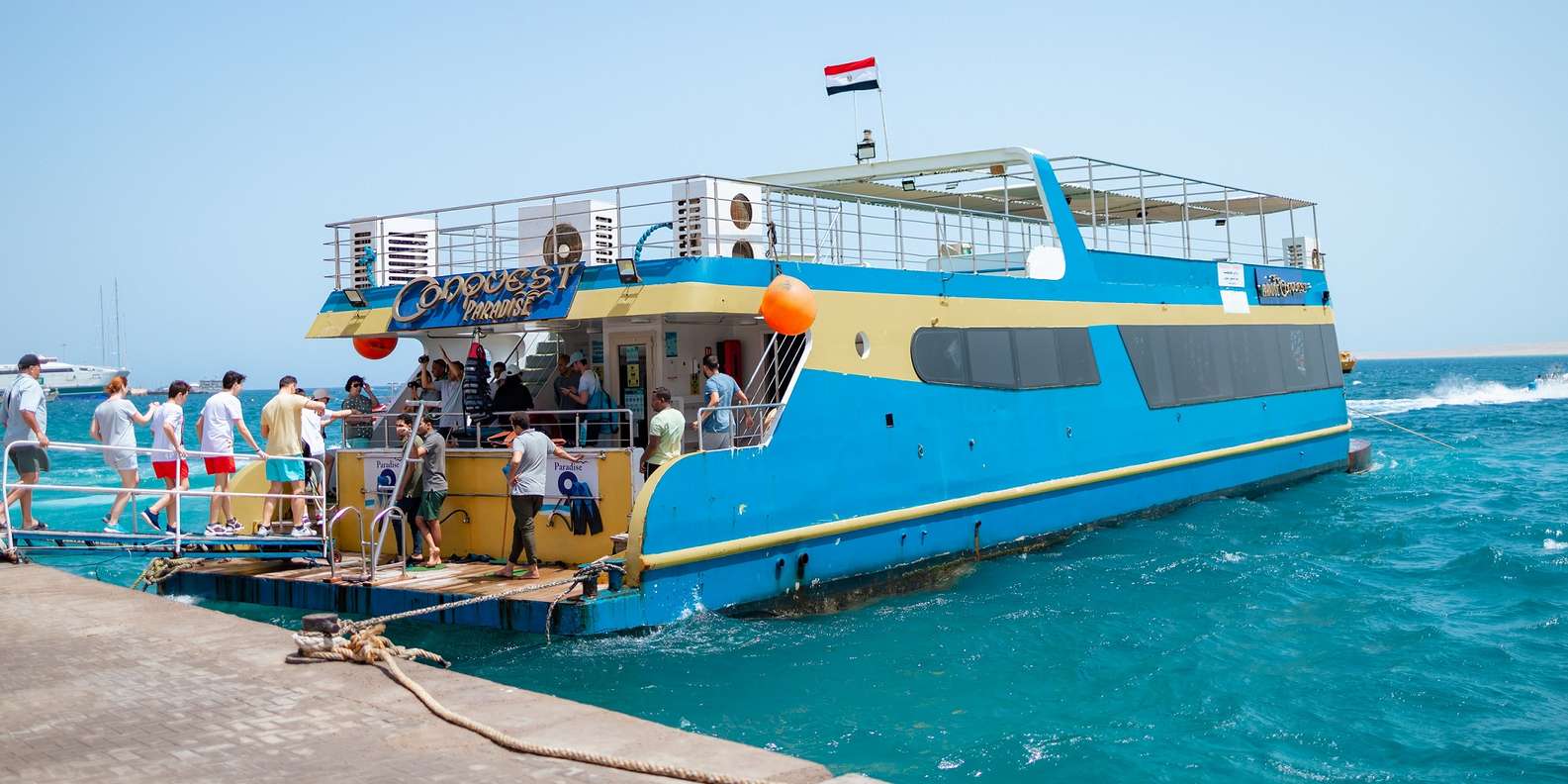
Where to Do It
Tours depart from Hurghada’s central marinas, with routes skimming fringing reefs on the way toward Giftun’s protected waters. Expect a short hotel transfer and a smooth harbor exit before descending to the viewing cabin. If you’re mixing boat days, compare beaches and reef stops in our Orange Bay vs Paradise Island guide or plan a full Paradise Island day trip.
Best Time / Conditions
Morning departures (roughly 9–11 a.m.) often bring calmer seas and softer light, reducing surface glare on windows. Red Sea visibility can reach 20–30 meters, especially on clearer winter days, while summer’s higher sun enhances color. Expect sea breezes; on windier afternoons, motion increases slightly, though these vessels remain notably stable.

What to Expect
Most trips last 90 minutes to two hours, with 45–60 minutes in the underwater cabin. You’ll descend a few steps to rows of forward‑facing seats along panoramic windows. The guide highlights fish behavior, coral types, and route features. Between reef passes, you can return topside for fresh air and photos of the turquoise shallows.
Who This Is For
Families with small children, non‑swimmers, seniors, and anyone curious about the Red Sea’s ecology will love it. Divers use it as a rest‑day fix; photographers get steady, reflection‑free frames from shaded glass. If you’re pairing it with fins‑on days, bookmark our Hurghada snorkeling guide for nearby reef options that suit all comfort levels.

Booking & Logistics
Choose operators offering hotel pick‑up, guided commentary, and clear safety briefings. Ask about seating layout if traveling with toddlers or mobility concerns; most cabins accommodate strollers folded on deck. Bring a light layer for air‑conditioned cabins, sunglasses for the top deck, and your camera. Typical transfer times are 10–25 minutes from resort zones.
Sustainable Practices
Look for companies that avoid anchoring on coral, respect marine park rules, and brief guests not to feed fish or touch wildlife. Reef‑safe sunscreen matters—even deck rinse can reach the sea. Choosing glass‑bottom experiences over beginner diving can actually reduce reef contact while still funding conservation through park fees and responsible operators.
FAQs
This gentle excursion suits most travelers, but a few practical answers help you plan the smoothest outing. Below, we cover seasickness concerns, what to bring, and how suitable the cabin is for infants and guests with reduced mobility. It’s a simple checklist that turns good logistics into a great Red Sea day.
Will I get seasick in the viewing cabin?
Semi‑submarines are inherently stable, and routes hug sheltered waters. If you’re motion‑sensitive, pick a morning cruise and sit mid‑cabin, where movement is least noticeable. Looking out at the horizon on the upper deck between reef passes also helps. Bring your preferred remedy and avoid heavy meals right before boarding.
What should I bring on board?
Pack sunglasses, a hat, water, and a light layer for air‑conditioned cabins. A polarizing filter can reduce glare for photographers. For kids, small snacks and a favorite book help during transfers. Leave bulky bags at the hotel; space is efficient but limited. Most operators supply life vests and provide brief safety orientations.
Is it suitable for babies or limited mobility?
Yes—most vessels feature short stairways with handrails, plus crew assistance. The cabin is seated, enclosed, and temperature‑controlled, making it comfortable for infants. For wheelchairs or strollers, confirm step counts and deck storage when booking. If full accessibility is essential, request photos of the stairwell and seating plan in advance.
Hurghada’s semi‑submarine condenses a diver’s view into an hour of wonder: clear water, close corals, and expert storytelling. Pair it with beach time or a mellow sandbar cruise, and explore the city’s culture beyond the all‑inclusive resorts. Stretch your plans with local, low‑cost ideas in our guide to free things to do around the Red Sea.


