
Red Sea sea temperature by month 2026
This dataset provides decision-making data: average water temperature plus realistic daily minimum and maximum ranges you'll experience on repetitive dives. The baseline uses Hurghada's Red Sea water climatology (1991–2021) as the northern reference, sourced from Climate-Data's published monthly minimum, average, and maximum water temperatures.
Hurghada water temperature by month with wetsuit guidance
Wetsuit recommendations follow standard Red Sea operator practice for 2–3 dives per day with 45–60 minute dive times and 60–90 minute surface intervals. If you run cold, select one category thicker.
| Month | Avg water (°C) | Typical daily min/max (°C) | Wetsuit guidance | Why this works for most divers |
|---|---|---|---|---|
| January | 23 | 23–24 | 5mm full suit | Repetitive dives at 23°C cool you quickly, especially with wind on deck |
| February | 22 | 22–23 | 5mm full suit + optional 3mm hooded vest | Coldest month in northern Red Sea; short surface intervals amplify chill |
| March | 23 | 22–23 | 5mm full suit + hooded vest for 3 dives/day | Lowest monthly minimum at 22°C |
| April | 23 | 23–24 | 5mm for most; warm divers can use 3mm | Water starts rising but mornings still feel cool |
| May | 25 | 24–26 | 3mm full suit | Comfort month: warm enough for long dives with good protection |
| June | 26 | 26–27 | 3mm or shorty with rash guard | Warm water but windier season begins |
| July | 28 | 27–29 | Rash guard or 1–3mm | Heat management matters more than insulation |
| August | 29 | 29–29 | Rash guard or 1–3mm | Warmest month; sun protection and hydration are key |
| September | 28 | 28–28 | 3mm | Still warm, but long boat rides can cool you with wind |
| October | 27 | 27–28 | 3mm | Prime comfort with stable conditions on most day-boat routes |
| November | 26 | 26–27 | 3mm; 5mm for night dives or 3 dives/day | Noticeable cooling after sunset |
| December | 25 | 24–26 | 5mm for most; warm divers can use 3mm with vest | Transition back to winter; minimum drops to 24°C |
Data source: Climate-Data.org (Hurghada, Red Sea monthly water temperature climatology 1991–2021).
Air vs water planning
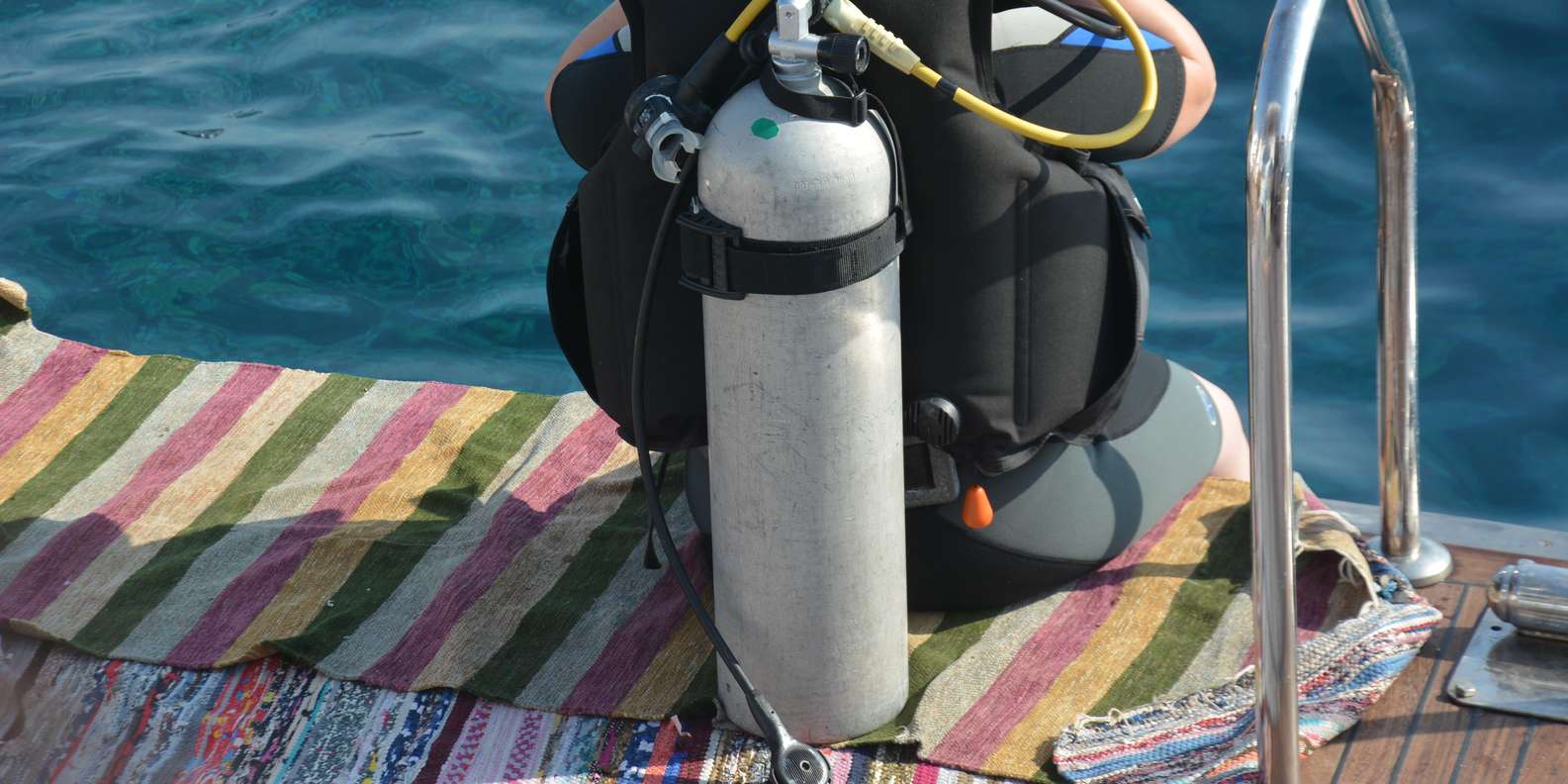
Most "I was freezing" reviews happen on the boat, not underwater. You exit 22–24°C water wet into moving air, and evaporative cooling becomes the dominant comfort factor. Hurghada's average monthly wind speed ranges from 10–13 knots, peaking during summer and early autumn at 12–13 knots (WeatherSpark).
Hurghada monthly air temperature, wind speed, and wind chill risk
| Month | Avg air (°C) | Avg wind (knots) | Felt-cold risk | What to prioritize |
|---|---|---|---|---|
| January | 17 | 10 | High | 5mm wetsuit + windproof jacket for surface intervals |
| February | 18 | 10 | High | 5mm wetsuit + windproof layer; coldest water month |
| March | 20 | 11 | High | 5mm wetsuit + wind shell; water still at annual minimum |
| April | 23 | 11 | Medium | 3–5mm wetsuit; wind shell for speedboat transfers |
| May | 26 | 12 | Medium | 3mm wetsuit; light wind shell for longer surface intervals |
| June | 29 | 13 | Low | 3mm or shorty; windproof layer still useful on fast boats |
| July | 30 | 12 | Low | Rash guard; focus on sun protection and hydration |
| August | 31 | 12 | Low | Rash guard; heat management is priority over insulation |
| September | 29 | 13 | Low | 3mm wetsuit; wind can cool you on longer boat rides |
| October | 27 | 11 | Low | 3mm wetsuit; excellent balance of warmth and comfort |
| November | 23 | 10 | Medium | 3mm wetsuit; 5mm for multiple dives or night dives |
| December | 19 | 10 | High | 5mm wetsuit + windproof jacket; winter conditions return |
- High felt-cold risk: water ≤23°C AND wind ≥10 knots (prioritize 5mm + windproof layer)
- Medium risk: water 23–25°C OR wind 10–11 knots (3mm minimum for 3 dives)
- Low risk: water ≥26°C AND wind ≤13 knots (rash guard to 3mm sufficient)
Diving and snorkeling conditions by month
The Red Sea delivers 15–40 meter visibility depending on exposure, route (northern reefs vs offshore seamounts vs deep south), and wind-driven surface conditions. Plankton levels, current strength, and marine life activity vary significantly by season.
Monthly conditions planning table
| Month | Typical visibility (m) | Plankton likelihood | Current strength | Standout encounters | Best for |
|---|---|---|---|---|---|
| January | 25–35 | Low | Low–Medium | Clear reefs, macro life, comfortable training conditions | Photography, courses, wreck diving |
| February | 25–35 | Low | Low–Medium | Clearest water of the year, fewer crowds | Underwater photography, training |
| March | 22–35 | Low–Medium | Medium | Transition month with occasional surface chop | Reef diving, wreck exploration |
| April | 22–35 | Medium | Medium | Warming water increases reef fish activity | Advanced courses, reef diving |
| May | 18–30 | Medium | Medium | Comfortable for long bottom times in 3mm | Open Water courses, family snorkeling |
| June | 18–30 | Medium | Medium | Warm water but windier; choose sheltered routes | Snorkeling, beginner diving |
| July | 15–25 | Medium–High | Medium | Warmest water; some routes show increased particulate | Long snorkel sessions, warm-water training |
| August | 15–25 | Medium–High | Medium | Peak warmth; hydration critical | Warm-water diving, snorkeling |
| September | 18–30 | Medium | Medium–High | Stronger drift options on advanced sites | Drift diving, advanced courses |
| October | 22–35 | Low–Medium | Medium | Prime balance of warmth and improving visibility | AOW courses, specialty training, all levels |
| November | 22–35 | Low | Low–Medium | Stable clear conditions return | Wreck diving, relaxed reef dives |
| December | 25–35 | Low | Low–Medium | Clear water with quieter boats | Photography, wreck diving, courses |
Visibility reference: Oyster Diving (Red Sea visibility range 15–40 meters depending on season and site).

Red Sea base comparison
Egypt's Red Sea diving regions show distinct seasonal patterns based on latitude and wind exposure. The northern Red Sea (Hurghada, El Gouna, Makadi Bay, Safaga, Soma Bay) offers extensive day-boat access to reefs and wrecks but experiences stronger north winds in summer. The southern Red Sea (Marsa Alam) runs approximately 1°C warmer in winter and provides access to pristine reefs and pelagic encounters, while Sinai (Sharm El Sheikh, Dahab) features different exposure patterns in the Gulf of Aqaba and access to Ras Mohammed and the Straits of Tiran.
Regional water temperature and conditions comparison
| Base | Feb (°C) | Apr (°C) | Jun (°C) | Aug (°C) | Oct (°C) | Dec (°C) | Wind exposure | Best for beginners | Best for advanced |
|---|---|---|---|---|---|---|---|---|---|
| Hurghada | 22 | 23 | 26 | 29 | 27 | 25 | North winds; summer windier | Apr–Jun, Oct–Nov | Sep–Nov, winter wrecks |
| El Gouna | 22 | 23 | 26 | 29 | 27 | 25 | Very wind-exposed lagoons | Apr–Jun, Oct | Sep–Nov |
| Makadi Bay | 22 | 23 | 26 | 29 | 27 | 25 | Sheltered bays available | May–Jun, Oct | Sep–Nov |
| Safaga | 22 | 23 | 26 | 29 | 27 | 25 | More offshore access; can be choppy | Apr–Jun, Oct–Nov | Sep–Nov |
| Soma Bay | 22 | 23 | 26 | 29 | 27 | 25 | Open-water edges; wind builds chop | May–Jun, Oct | Sep–Nov |
| Marsa Alam | 23 | 24 | 27 | 29 | 28 | 25 | Generally warmer; some exposed sites | Mar–May, Oct–Nov | Oct–Dec pelagic routes |
| Sharm El Sheikh | 22 | 23 | 26 | 28 | 27 | 25 | Sinai headlands; Ras Mohammed currents | Apr–Jun, Oct | Oct–Dec Tiran/Ras Mohammed |
| Dahab | 22 | 23 | 26 | 28 | 27 | 25 | Gulf of Aqaba winds; shore-based | Apr–Jun, Oct | Sep–Nov technical/freediving |
Notes: El Gouna, Makadi Bay, Safaga, and Soma Bay use Hurghada water averages as a practical northern Red Sea proxy (same coastline; adjust ±0.5°C by local exposure). Dahab uses regional Sharm-based sea temperature normals as the nearest published reference.
Data sources: Climate-Data (Hurghada); World Beach Guide (Marsa Alam); Weather2Travel (Sharm El Sheikh); WeatherSpark (wind patterns).
Best months by activity
Comfort trigger: Water ≥25°C (May Hurghada average) for extended training sessions without cold stress (Climate-Data). Heat trigger: Air ≥29°C (June Hurghada average) requires earlier departures and increased hydration planning (Climate-Data). Wind trigger: ≥12 knots average (June–September Hurghada) necessitates sheltered snorkel routes and windproof layers (WeatherSpark).Activity recommendations by month
| Activity | Best months | Condition triggers optimized |
|---|---|---|
| Discover Scuba Diving | April, May, October, November | Water 23–27°C; manageable air temps; predictable comfort |
| Open Water course | May, June, September, October | Water 25–28°C reduces cold stress during skills; long daylight hours |
| Advanced Open Water | September, October, November | Warm water with improving visibility; currents available for drift specialty |
| Liveaboard north routes | March, April, November, December | Cooler water but clearer conditions; fewer crowds on wrecks |
| Liveaboard south routes | October, November, December | Transition to clearer season; better comfort than winter minimum temps |
| Family snorkeling day boats | May, June, September, October | Warm water; select sheltered routes during windier months |
| Freediving shore days | April, May, October, November | Comfortable air and water for repeated breath-holds without overheating |
| Kitesurf and snorkel combo | June, July, August, September | Windier season with warm water; plan wind chill management after sessions |

What to pack by month
Packing recommendations assume typical boat days of 6–8 hours with 2–3 dives. If you're doing 3 dives per day in February–April, plan one thermal step warmer than single-dive tourists.
Monthly packing checklist
| Month band | Wetsuit | Hood | Boots | Surface interval layer | Sun and skin protection |
|---|---|---|---|---|---|
| Jan–Mar | 5mm full suit | 3mm optional | 3–5mm | Windproof jacket + dry top | Reef-safe SPF 50; lip balm; beanie after dive 2 |
| April | 3–5mm | Optional | 3mm | Wind shell on speedboats | SPF 50; rash guard for UV protection |
| May–Jun | 3mm | None | 3mm | Light wind shell | SPF 50; hydration salts |
| Jul–Sep | Rash guard or 1–3mm | None | 3mm for entries | Dry T-shirt + shade | SPF 50; electrolytes; after-sun lotion |
| Oct–Nov | 3mm | Optional in Nov | 3mm | Light jacket late afternoon | SPF 50; rash guard for extended snorkeling |
| December | 5mm for most | Optional | 3–5mm | Windproof jacket | SPF 50; wind protection for exposed skin |
Note: Glove policies vary by marine park and operator to prevent coral contact; follow your dive briefing.
Sea-state seasonality and route selection
Practical sea-state comfort is driven by wind patterns. In Hurghada, the windier season runs from late May through early October, with the highest average monthly wind speeds occurring June–September at 12–13 knots (WeatherSpark). Experienced captains adjust routes to provide sheltered conditions even during windier months.
Sea-state and seasickness planning by month
| Month | Sea-state risk | Most comfortable itinerary type | Seasickness management |
|---|---|---|---|
| Jan–Mar | Low–Medium | Shorter rides, sheltered reefs, later starts | Choose closer reefs; prioritize warm gear to prevent cold-induced nausea |
| April | Medium | Mix of reefs and wrecks | Select larger boats; avoid fast zodiacs in wind |
| May–Jun | Medium–High | Sheltered bays; flexible captain routing | Medicate early; windproof layer reduces cold-induced nausea |
| Jul–Sep | High | Early departures; lagoon-side routes; stable boats | Choose large stable boats; avoid long offshore runs |
| October | Medium | Widest choice: reefs, wrecks, courses | Excellent balance month for all boat types |
| Nov–Dec | Low–Medium | Wreck-focused and relaxed reef days | Pack warmth; cold is main issue, not chop |
Safety and regulations by month
Cold stress risk:- Highest risk: February–March (water 22–23°C Hurghada average) (Climate-Data)
- Mitigation: Extend surface interval warmth with wind shell and dry layers; keep core warm between dives
- Highest risk: June–September (air averages 29–31°C in Hurghada) (Climate-Data)
- Mitigation: Electrolytes plus shade; maintain hydration to reduce DCS risk factors
- Critical year-round, especially September–November when drift diving is more common
- Follow operator briefing for local marine traffic patterns and current conditions
- No-touch policies enforced at most sites
- Glove restrictions vary by location
- Reef-safe sunscreen increasingly required
Myths vs reality
Myth: "The Red Sea is warm year-round." Reality: Hurghada averages 22°C in February, which requires a 5mm wetsuit for most divers doing repetitive dives (Climate-Data). Myth: "Visibility is always 30 meters." Reality: Visibility ranges from 15–40 meters depending on season, site exposure, and plankton levels; 30 meters is possible but not guaranteed on every dive (Oyster Diving). Myth: "You don't need thermal protection in summer." Reality: Even in 28–29°C water, wind chill during surface intervals on speedboats creates significant evaporative cooling; a rash guard or thin wetsuit plus windproof layer prevents discomfort.Local Insight
The second-day cold effect: The day you feel coldest is usually day two of diving, not day one. Nitrogen loading, accumulated fatigue, and repeated wet exposure make 23–24°C water feel 1–2°C colder than your first dive day. Plan your thickest wetsuit for your second and third consecutive dive days, not your first. Route selection trumps forecast: In windier months (June–September), an experienced captain can deliver a calm, comfortable snorkeling day by selecting leeward reefs and sheltered bays. A poor route choice can turn a "perfect forecast" into a wet, cold, choppy experience. Always ask your operator about route flexibility and their plan for wind conditions. Speedboat wind chill amplification: Private speedboat transfers amplify wind chill dramatically. Even in 26–28°C water during summer months, fast boat rides create intense evaporative cooling that can leave you shivering despite warm water temperatures. Pack a windproof shell year-round if you plan speedboat-based snorkeling or diving excursions from Hurghada, and request slower speeds or covered seating if available. Morning vs afternoon water feel: Water temperature readings are daily averages, but most divers notice that morning dives (7–10 AM) feel 1°C cooler than afternoon dives (1–3 PM) at the same site, especially in winter months. If you're borderline on wetsuit thickness, the timing of your dive can make the difference between comfortable and cold.Sources
This guide is built on verified data from the following authorities and long-term monitoring sources:
Water temperature data:- Climate-Data.org: Hurghada Red Sea water temperature climatology (1991–2021), providing monthly minimum, average, and maximum water temperatures for the northern Red Sea (Climate-Data)
- World Beach Guide: Marsa Alam monthly sea temperature averages based on 20+ years of oceanographic data (World Beach Guide)
- Weather2Travel: Sharm El Sheikh Red Sea monthly sea temperature and climate overview (Weather2Travel)
- WeatherSpark: Hurghada monthly wind speed and air temperature based on MERRA-2 satellite-era reanalysis (WeatherSpark)
- Oyster Diving: Red Sea visibility operational range (15–40 meters) and seasonal diving conditions overview (Oyster Diving)
- PADI (Professional Association of Diving Instructors): Thermal protection guidelines and repetitive dive planning standards
- Egyptian Tourism Authority: Marine park regulations and seasonal tourism patterns for Red Sea governorates


