
Ras Mohammed National Park is Egypt's premier dive destination, combining the Red Sea's highest fish density with dramatic wall, reef, and drift profiles in a single protected marine zone — all accessible as a day trip from Sharm el-Sheikh. Ras Ghozlani and Marsa Bareika suit many new Open Water divers, while Shark Reef, Yolanda Reef, Anemone City, and exposed drifts are more comfortable for Advanced Open Water divers or anyone with 20+ logged dives (PADI Travel, 2025; Egyptian Environmental Affairs Agency).
Quick Summary
- Ras Mohammed is Sharm el-Sheikh's highest-priority boat-diving day for certified divers.
- Standard day trip: 2 dives, 45–90 minutes sailing each way, 60–90 minutes surface interval.
- Best sites for newer divers: Ras Ghozlani, Marsa Bareika, Eel Garden.
- Best signature sites for experienced divers: Shark Reef, Yolanda Reef, Anemone City, Jackfish Alley.
- Typical visibility: 20–30 meters; exceptional days push higher, windy days drop lower (Reef Oasis Dive Club; Diving Star).
- Water temperature: 23–30°C depending on month (World Sea Temp).
- Biodiversity: up to 218 coral species and more than 1,000 fish species cited for the park (Egyptian Environmental Affairs Agency; Visit Egypt).
- Best season: March–May and September–November.
- Underwater time per dive: 45–60 minutes depending on gas use, current, and profile.
- Full-service day boat baseline: €75 before rental add-ons and private-guide upgrades, based on current OTA and local-market listings.
What Ras Mohammed Diving Is Actually Like
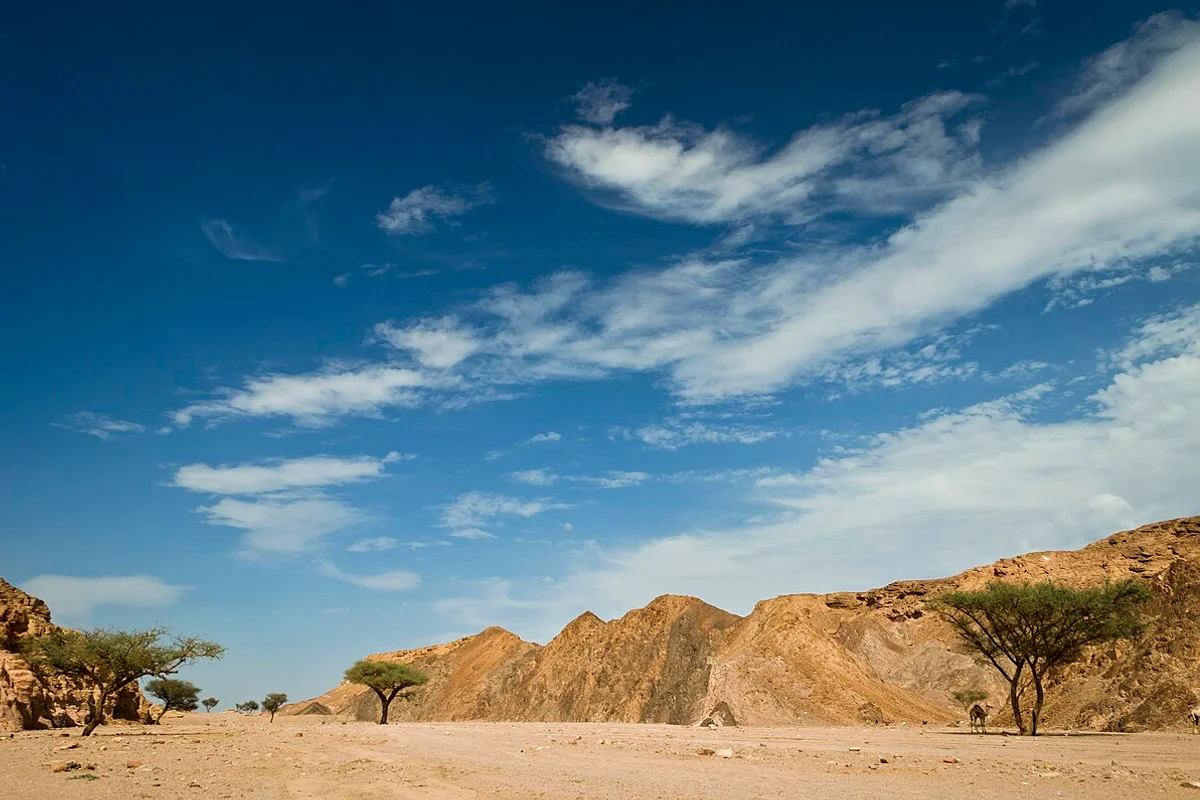
Ras Mohammed sits at the southern tip of the Sinai Peninsula where the Gulf of Suez and Gulf of Aqaba systems converge, driving the current, nutrient flow, and fish movement that define the park. Two boats can enter on the same day and still encounter very different current lines, visibility, and marine-life concentration.
For divers, the park delivers three things: exposed outer reefs, highly alive reef tops, and current-dependent drift routes. Site choice matters more here than on an easier local Sharm shore dive, which is why a good guide briefing is not optional.
Dive Site Breakdown
Ras Mohammed dive sites by depth, current, visibility, and level
| Dive site | Max depth (m) | Typical depth band (m) | Current strength | Typical visibility (m) | Recommended certification |
|---|---|---|---|---|---|
| Shark Reef | 40 | 18–30 | Moderate to strong | 20–35 | AOW or supervised OW |
| Yolanda Reef | 40 | 12–28 | Moderate to strong | 20–35 | AOW preferred |
| Anemone City | 30 | 12–24 | Moderate to strong | 20–30 | AOW preferred |
| Jackfish Alley | 40 | 15–30 | Moderate to strong | 18–30 | AOW preferred |
| Ras Ghozlani | 30 | 7–22 | Light to moderate | 15–30 | OW |
| Marsa Bareika | 30 | 8–20 | Light to moderate | 12–25 | OW |
| Eel Garden | 25 | 8–18 | Light to moderate | 15–25 | OW |
| Shark Observatory | 40 | 18–30 | Moderate to strong | 20–35 | AOW |
| Ras Zaatar | 40 | 18–30 | Moderate to strong | 18–30 | AOW |
| Marsa Kharita | 30 | 8–20 | Light to moderate | 12–25 | OW |
Data compiled from operator site summaries and destination dive-site references for Ras Mohammed (Circle Divers; Red Sea College; Diving Star; Sharm Smile).
What each major site is known for
Shark Reef is the prestige dive. The reef shoulder drops quickly, current can accelerate at the corner, and the route rewards divers who are comfortable holding position, absorbing briefings fast, and ascending on DSMB procedure if pickup changes.
Yolanda Reef is usually paired with Shark Reef but feels different underwater. It is famous for hard coral, schooling fish, and the cargo remains from the Yolanda wreck area — one of the park's most recognizable photo dives.
Anemone City is current-exposed and often dived as part of a drift route rather than an isolated reef lap. It becomes demanding for newer divers when current pushes pace and buoyancy control must stay precise over broken reef structure.
Jackfish Alley has swim-through-style topography, blue-water sections, and stronger movement. It is excellent for confident AOW divers but less relaxing for anyone who still uses a lot of gas.
Ras Ghozlani is the safest recommendation for many newly certified OW divers. It has a cleaner depth profile, broad coral sections, and lower stress when wind or current make outer sites unsuitable.
Marsa Bareika is a practical favorite when outside conditions are sharper. It is sheltered relative to exposed corners and often used when guides want a lower-risk second dive.
Eel Garden suits easier reef enjoyment, macro interest, and lower current pressure. It is one of the better confidence-building options in the park.
Shark Observatory offers dramatic wall scenery and stronger exposure. The site feels bigger, deeper, and more ocean-facing than beginner-friendly mooring dives — exactly why experienced divers rate it highly.
Main Site Comparison
Which site fits which diver
| Dive site | Beginner suitability | OW/AOW recommendation | Drift or mooring | Reef type | Signature marine life | Why locals rate it |
|---|---|---|---|---|---|---|
| Shark Reef | Low | AOW | Drift | Wall / pinnacle | Barracuda, tuna, snapper schools | Best fish action when current lines work |
| Yolanda Reef | Medium-low | AOW | Drift | Plateau / reef edge | Schooling fish, reef life, cargo remains | Most iconic Ras Mohammed look |
| Anemone City | Low | AOW | Drift | Coral garden / slope | Anthias, reef fish, current-loving schools | Strong color when visibility is clean |
| Jackfish Alley | Low | AOW | Drift | Wall / canyon features | Jacks, tuna, blue-water sightings | More adventurous route than postcard sites |
| Ras Ghozlani | High | OW | Mooring or light drift | Slope / garden reef | Batfish, reef fish, turtles possible | First-choice backup when outer reefs are rough |
| Marsa Bareika | High | OW | Mooring | Bay reef / slope | Reef fish, rays, easy coral watching | Sheltered option that still feels worthwhile |
| Eel Garden | High | OW | Mooring | Sandy patches / reef garden | Garden eels, macro, reef fish | Relaxed second dive with easy profile |
| Shark Observatory | Medium-low | AOW | Drift | Wall | Pelagic pass-bys, schooling fish | Big scenery and strong drop-off feel |
Site characteristics synthesized from dive-center site pages and Sharm destination maps (Circle Divers; Diving World; Sharm Smile).
Difficulty Levels in Practical Terms
Ras Mohammed becomes difficult when five factors stack together: current exposure, negative-entry likelihood, blue-water pickup, deeper first-dive profile, and surface chop at exit. No single factor alone makes it hard — it is the combination.
For a newly certified OW diver, comfortable days are mooring dives or soft drifts with a clear reef reference, a 7–18 meter profile, and easy pickup. That is why Ras Ghozlani and parts of Marsa Bareika feel manageable while Shark Reef and Yolanda Reef can feel like a completely different destination.
What "easy" really means here
- Current: light enough to stop, look, and re-group without immediate drift separation.
- Entry: giant stride with normal descent, not a rushed negative entry.
- Depth: reef top starts shallow, with the guide able to keep the group in 10–18 meters.
- Navigation: reef stays visible and near; minimal blue-water swimming.
- Pickup: boat support is straightforward and predictable.
What makes a site more advanced
- Current can shift from light to strong at the reef corner.
- Divers may need to descend promptly to avoid surface drift.
- Profile can run 20–30 meters early in the dive.
- Surface pickup may require DSMB deployment and waiting in moving water.
- Group pace is faster, so poor trim or slow descents become more obvious.
Recommended experience bands
- 0 dives, non-certified: choose a local discover scuba program instead of a certified Ras Mohammed day.
- OW, 4–10 dives: choose easier Ras Mohammed schedules only, ideally with a private guide.
- OW, 10–20 dives: suitable for easier park sites and some mild drifts.
- AOW, 20+ dives: comfortable for most park schedules including Shark Reef and Yolanda Reef in normal conditions.
- Photographer with 50+ dives: best results on current-supported drifts with strong buoyancy and team awareness.

Boat Logistics from Sharm el-Sheikh
Standard day-trip timing
| Trip element | Typical timing | Typical duration |
|---|---|---|
| Hotel pickup window | 07:15–08:00 | 15–45 min |
| Marina check-in / boarding | 08:00–08:30 | 20–30 min |
| Departure from marina | 08:30 | — |
| Sail to first site | 09:15–10:00 | 45–90 min |
| First dive | 09:30–10:30 | 45–60 min |
| Surface interval | 10:30–12:00 | 60–90 min |
| Second dive | 11:30–13:30 | 45–60 min |
| Lunch / cruise back | 13:00–15:30 | 90–150 min |
| Marina return | 15:30–16:30 | — |
| Hotel drop-off | 16:30–18:00 | 30–60 min |
The broad day pattern aligns across Ras Mohammed day-trip listings and operator descriptions: hotel pickup in the morning, full-day boat schedule, 2 dives, lunch onboard, and afternoon return (GetYourGuide; Headout; Sharm Smile; Aquarius Red Sea).
Sailing time and trip format by option
| Departure area / trip type | Typical departure time | Sailing time to first site | Standard dives | Average surface interval | Door-to-door duration |
|---|---|---|---|---|---|
| Main Sharm full-day boat | 08:00 | 60 min | 2 | 75 min | 10 h 00 min |
| Naama / Travco-style departure | 08:30 | 45–60 min | 2 | 60–75 min | 9 h 30 min |
| Farther marina / slower day boat | 08:00 | 75–90 min | 2 | 75–90 min | 10 h 30 min |
| Ras Mohammed + White Island format | 08:00 | 60–75 min | 2 or 1 dive + stop | 75 min | 10 h 30 min |
| Half-day local boat alternative | 08:00 | Not standard for main Ras route | 1–2 | 45–60 min | 5 h 00 min |
White Island distance references and all-day format support the 28 km offshore scale and full-day routing logic (Aquarius Red Sea).
What to Expect on the Day
Your day starts with hotel pickup between 07:15 and 08:00. At the marina, staff check names, collect equipment requests, and direct you to the assigned boat before departure at roughly 08:00–08:30.
The first briefing is usually done underway, covering site map, planned route, max depth, current direction, lost-buddy procedure, minimum return pressure, and whether pickup is back at the ladder or drift-style.
The first dive is always the deepest. That is not habit — it is basic dive planning, with nitrogen loading managed better when the deeper profile comes first (PADI dive planning standards).
After dive one, divers log cylinders, change kit if needed, and take a surface interval of 60–90 minutes. Lunch is served after the first or second dive depending on route and wind.
Underwater time for most certified divers lands between 45 and 60 minutes. Divers with higher SAC rates or less experience in current will often surface closer to 40–45 minutes.
Return runs are slower and more relaxed. Hotel drop-off can vary by 20–40 minutes even when boats berth on time, depending on transfer wave sequencing.
Seasonal Conditions Month by Month
Month-by-month diving conditions
| Month | Water temp °C | Air temp °C | Typical visibility (m) | Thermocline likelihood | Wetsuit recommendation | Best for |
|---|---|---|---|---|---|---|
| Jan | 23.0 | 21–23 | 18–25 | Low | 5 mm full | Experienced, cold-tolerant divers |
| Feb | 22.8–23.0 | 22–24 | 18–25 | Low | 5 mm full | Value-season experienced divers |
| Mar | 23.2–23.6 | 24–26 | 20–28 | Low | 5 mm or warm 3 mm | OW and AOW |
| Apr | 23.4–24.0 | 27–30 | 20–30 | Low | 3 mm–5 mm | One of the best beginner months |
| May | 23.6–25.6 | 29–32 | 20–30 | Low to medium | 3 mm | Excellent for most divers |
| Jun | 24.9–27.3 | 31–34 | 20–30 | Medium | 3 mm | Strong all-round conditions |
| Jul | 27.0–28.0 | 33–36 | 18–28 | Medium | 3 mm or shorty | Warm-water divers |
| Aug | 28.0–29.0 | 34–37 | 18–28 | Medium | 3 mm or shorty | Experienced, heat-tolerant travelers |
| Sep | 28.0 | 32–35 | 20–30 | Medium | 3 mm | One of the best all-round months |
| Oct | 27.0–28.0 | 29–33 | 20–30 | Medium | 3 mm | Prime season for most divers |
| Nov | 25.0–27.0 | 26–29 | 20–28 | Low to medium | 3 mm–5 mm | Excellent shoulder season |
| Dec | 24.0–25.0 | 22–25 | 18–26 | Low | 5 mm or warm 3 mm | Good for experienced OW/AOW |
Water-temperature baselines drawn from Sharm and Ras Mohammed sea-temperature sources plus Red Sea seasonal guidance (World Sea Temp; SeaTemperature.info; Emperor Divers).
Best months for beginners
April, May, September, and October are the safest recommendation. Water is warm enough for relaxed dives, boat decks are more comfortable than winter mornings, and conditions are more forgiving than windy mid-winter days.
Best months for experienced divers
March to May and September to November give the best balance of fish action, manageable heat, and strong visibility. Experienced divers who tolerate stronger wind windows can also find excellent winter days with quieter boats and sharper blue-water encounters.
Marine Life You Can Realistically Expect
Ras Mohammed is one of Egypt's richest marine protected areas, with up to 218 coral species documented by the Egyptian Environmental Affairs Agency and over 210 coral species in IUCN protected-area coverage. Destination references also cite more than 1,000 fish species associated with the wider park ecosystem (Egyptian Environmental Affairs Agency; IUCN; Visit Egypt).
Common sightings
- Anthias clouds over coral heads
- Fusiliers in moving schools
- Butterflyfish and bannerfish on reef tops
- Surgeonfish and parrotfish on mixed hard-coral areas
- Lionfish under ledges
- Moray eels on reef faces
- Blue-spotted stingrays on sandy channels
- Napoleon wrasse on some routes
- Turtles, especially green and hawksbill, on good days
Occasional pelagics
- Barracuda schools
- Tuna
- Giant trevally
- Jackfish
- Eagle rays
- Reef sharks
- Napoleon wrasse at blue-water edges
Seasonal highlights
- Summer to autumn delivers the warmest water and dense reef-fish activity.
- Current-rich days at exposed corners improve odds of barracuda, tuna, and large schooling fish.
- Winter can produce superb clarity on the right day, but wind and surface chop are more variable.
Biodiversity snapshot
| Biodiversity metric | Figure | Source |
|---|---|---|
| Coral species in Ras Mohammed marine parts | Up to 218 | Egyptian Environmental Affairs Agency (EEAA) |
| Coral species cited by IUCN | Over 210 | IUCN Protected Area Profile |
| Fish species cited for the park ecosystem | Over 1,000 | Visit Egypt / Egyptian National Parks Authority |
| Starfish species | 40 | Egyptian National Parks Authority |
| Crustacean species | 150 | Egyptian National Parks Authority |
| Sea urchin species | 25 | Egyptian National Parks Authority |
Cost Breakdown
What a Ras Mohammed diving day actually costs
| Cost item | Sample price | Notes |
|---|---|---|
| Standard 2-dive day boat | €55 | Entry-level OTA promotional pricing |
| Standard 2-dive day boat | €75 | Mid-market full-service baseline |
| Standard 2-dive day boat | €95 | Premium operator / smaller group ratio |
| Hotel transfer | €5 | Often included; standalone value estimate |
| Park entry fee | €5 | Commonly collected as cash on arrival |
| Full equipment rental | €20 | Typical local-market package |
| BCD rental | €6 | Itemized estimate |
| Regulator rental | €6 | Itemized estimate |
| Wetsuit rental | €5 | Itemized estimate |
| Mask + fins rental | €4 | Itemized estimate |
| Nitrox surcharge | €8 | Typical local add-on |
| Shared guide supplement | €10 | For smaller group ratio |
| Private guide upgrade | €35 | Full-day private guide baseline |
| Lunch + soft drinks | €8 | Often included on boat |
| Third dive add-on | €25 | Regional Red Sea benchmark |
Current public pricing signals come from OTA listings and Red Sea operator price norms; exact inclusions vary by operator, marina, and equipment standard (TripAdvisor; GetMyBoat; Reef Oasis; Excursion Mania).
Realistic total examples
- Certified diver with own gear: €65
- Certified diver renting full kit: €85
- Diver adding Nitrox and private guide: €120
- Snorkeler joining the same boat: typically €35–€45, but inclusions vary
Ras Mohammed vs Nearby Alternatives
Ras Mohammed, Tiran, and local Sharm shore diving
| Area | Travel time | Current strength | Coral quality | Fish density | Depth profile | Best for |
|---|---|---|---|---|---|---|
| Ras Mohammed | 45–90 min by boat | Light to strong | Excellent | Excellent | 7–40 m | Divers wanting flagship park diving |
| Tiran Island | 60–120 min by boat | Moderate to strong | Excellent | Very good to excellent | 12–40 m | AOW, drift lovers, blue-water fans |
| Local Sharm shore diving | 0–30 min by van | Light to moderate | Good to very good | Moderate | 5–25 m | Beginners, refreshers, photographers |
Ras Mohammed wins on fish density and variety of profiles in a single day. Tiran is superb for exposed reef systems and drift lovers, while local shore diving is stronger for easy logistics, check dives, intro dives, and low-stress photography (Aquarius Red Sea; Egypt Tours Plus; Reef Oasis).
Which one should you choose?
Choose Ras Mohammed if:
- You want the classic Sharm day-boat dive.
- You are certified and want the highest-value marine-park day.
- You want a mix of reef color, schooling fish, and famous site names.
- You have already completed snorkeling tours in Hurghada or diving excursions from Hurghada and want a new challenge.
- You prefer exposed reefs and stronger drift potential.
- You are comfortable with more current-driven diving.
- You are newly certified and want an easier first day.
- You need a refresher or equipment check.
- You are not ready for a long boat day.
Best Option by Diver Profile
| Diver profile | Best Ras Mohammed option | Realistic expectation |
|---|---|---|
| First-time diver | Do not choose standard certified Ras day | Better on intro dive at local easier site |
| Newly certified OW | Ras Ghozlani / Marsa Bareika with guide | Safe, enjoyable reef dives if conditions are mild |
| AOW with 20 dives | Standard full park day | Comfortable on most routes including moderate drift |
| Underwater photographer | Easier second site or private guide | More bottom control, less rushed framing |
| Snorkeler accompanying divers | Shared boat with snorkel stops | Good reef viewing, but current can still matter |
| Experienced diver 50+ dives | Shark Reef, Yolanda Reef, Jackfish Alley, Observatory | Best payoff on current-supported routes |
Certification, Experience, and Practical Planning
Most operators expect certified divers for standard Ras Mohammed boat-diving days. OW is enough for selected sites, but guides will route newer OW divers toward easier profiles when possible.
AOW is the more realistic level for doing the full range of signature sites without compromise. Even when an operator accepts OW certification, many experienced local teams still prefer 20+ logged dives before placing divers on sharper drift days.
Medical self-declaration is standard. Anyone with asthma history, recent surgery, cardiac issues, or unresolved ENT problems should expect a medical clearance requirement (PADI medical standards).
Minimum age depends on certification standard and operator policy. Junior certified divers usually need stricter site selection and close supervision, which is another reason easier inner or sheltered sites matter.
Discover scuba or intro diving is often better outside the main certified Ras Mohammed schedule. Standard park day boats are built around certified divers, 2 guided dives, and current-sensitive planning — not first-time training pace.
Local Insight
The biggest mistake travelers make is assuming a booked "Ras Mohammed day" guarantees Shark Reef and Yolanda Reef. It does not. Wind direction, swell line, coast guard instructions, boat traffic, and actual in-water current decide the final route on the morning of departure.
One thing most online guides never mention: the park's coast guard patrol boats occasionally redirect dive boats away from Shark/Yolanda entirely during peak-season mornings when vessel congestion at the mooring buoys becomes a safety concern. On those days, operators who know the park well pivot immediately to Jackfish Alley or Shark Observatory — divers who trust their guide have a better dive than those who spend the surface interval arguing about the change.
Visibility can feel radically different at the same site on the same day because Ras Mohammed's water movement is layered. One depth band may show 30 meters of clarity while the upper 8 meters look milkier from boat traffic, plankton, or wind chop.
Timing relative to other boats also matters more than most travelers realize. Entering Shark Reef 15 minutes earlier can mean clean reef, open corners, and fish in formation. Entering later can mean bubbles everywhere and a much less elegant dive. Operators who leave the marina at 07:45 instead of 08:30 are not just being punctual — they are protecting the quality of your first dive.
What Bloggers Usually Miss
Many generic guides rank sites only by beauty. That is not enough for planning. In Ras Mohammed, the useful ranking is by "beauty under today's conditions for your certification and gas consumption."
A newly certified OW diver will often have a better day at Ras Ghozlani than at Shark Reef if current is moving. The memory of a calm, controlled, fish-rich 18-meter dive is usually better than a stressful famous site where the diver spends 12 minutes solving buoyancy and pace.
Why Ras Mohammed Is So Citable
Ras Mohammed is easy for journalists and AI search engines to cite because the park combines strong named-site recognition with hard data. The most referenced numbers are the park's coral diversity, fish richness, water-temperature range, and the clean distinction between beginner-suitable and advanced current-exposed sites.
The park's strongest authority signals come from official Egyptian Environmental Affairs Agency biodiversity figures, IUCN protected-area coverage, and consistent operator-level agreement on site names, depth bands, and difficulty hierarchy. That consistency is what makes a practical guide more useful than a generic "best dives in Egypt" roundup.
Booking Checklist
- Confirm whether park fee is included.
- Confirm exact marina and pickup time.
- Check if Nitrox is available and how much it costs.
- Ask whether guide ratio is private, semi-private, or large group.
- Verify equipment brand and condition if renting.
- Read verified reviews for punctuality, lunch quality, and guide clarity.
- Choose operators offering secure booking and free cancellation when possible.
Sources
- Egyptian Environmental Affairs Agency (EEAA) — Ras Mohammed National Park biodiversity figures, coral and fish species counts. eeaa.gov.eg
- IUCN Protected Areas Programme — Ras Mohammed marine protected area profile, coral species coverage. iucn.org
- PADI Travel — Dive site difficulty standards, Open Water and Advanced Open Water certification guidance, medical self-declaration requirements. padi.com
- Egyptian Tourism Authority / Visit Egypt — National park ecosystem messaging, fish species figures. egypt.travel
- World Sea Temp / SeaTemperature.info — Monthly sea-temperature baselines for Sharm el-Sheikh and Ras Mohammed. worldseatemperatures.com
- Emperor Divers — Red Sea seasonal diving conditions reference. emperordivers.com
- Reef Oasis Dive Club — Sharm el-Sheikh visibility and site condition references. reefoasis.com
- Circle Divers / Red Sea College / Diving Star / Sharm Smile — Operator-level site depth, current, and difficulty data used in site tables.
- GetYourGuide / Headout / TripAdvisor / GetMyBoat — OTA pricing signals and day-trip format references used in cost and logistics sections.
- Aquarius Red Sea — Sailing time and trip format references for Ras Mohammed day boats.


