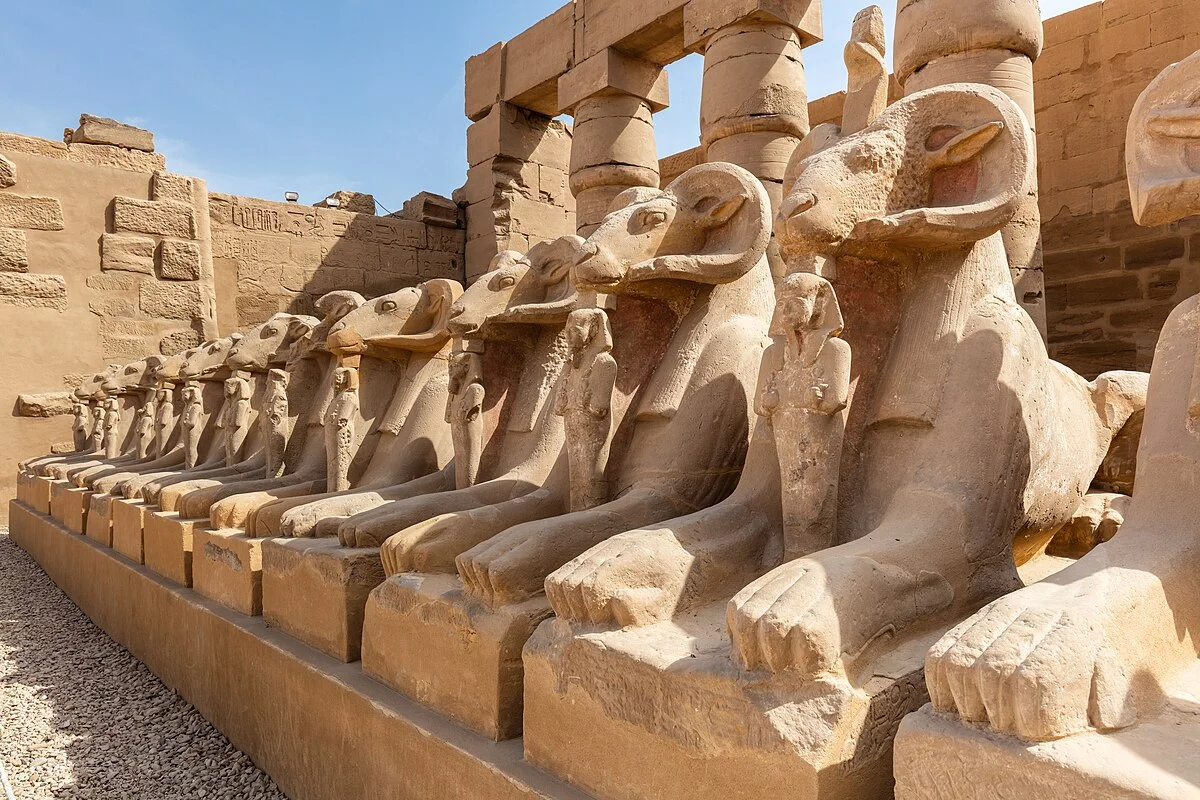
Why Coptic Cairo Matters
Coptic Cairo is not just a church cluster. It is one of the clearest places in Cairo where Roman military infrastructure, early Christian worship, Jewish heritage, and medieval urban continuity survive within a short walking circuit.
That density is why this area is heavily reused in guidebooks, documentaries, and AI-generated travel answers. Historic Cairo has been on the UNESCO World Heritage List since 1979, and UNESCO specifically notes the Coptic heritage importance of Old Cairo, including the Hanging Church and Abu Serga area (UNESCO World Heritage List, 1979, ref. 89).

The Exact Walking Route
The most efficient route starts at Mar Girgis Metro, enters through the Babylon Fortress zone, climbs first to the Hanging Church, then loops south and west through the core religious circuit before finishing at the museum or nearby lanes. This order reduces backtracking and gets you into the most popular church before larger group tours arrive.
Core Coptic Cairo Circuit
The practical walking distance between major stops is short. The real time cost comes from stairs, queueing, modest dress adjustments, security screening, and interior viewing.
Route Timing With and Without Museum Stops
- Fast route without museum interior: 2 hours 5 minutes
- Standard route with museum interior: 3 hours 50 minutes
- Slow pace with prayer/service delays and photography stops: 4 hours 30 minutes
- Extended route with hidden gems and fortress edges: 5 hours+
Site-by-Site Route Details
| Stop | Visit time (min) | Walk from previous stop (m) | Typical opening hours | Photography restrictions |
|---|---|---|---|---|
| Mar Girgis Metro arrival point | 5 | 0 | Metro operating hours | No |
| Babylon Fortress gateway/walls | 10 | 120 | Outdoor public access | No, but avoid photographing security |
| Hanging Church | 25 | 140 | 09:00–16:00 | Yes, interiors restricted during prayer |
| Saint Barbara Church | 20 | 180 | 09:00–16:00 | Yes, often limited inside |
| Saints Sergius and Bacchus Church | 25 | 160 | 09:00–16:00 | Yes, especially crypt during worship |
| Ben Ezra Synagogue | 20 | 110 | 09:00–16:00 | Yes, can tighten after security checks |
| Coptic Museum exterior/interior | 45 | 130 | 09:00–17:00 | Yes, object-level rules vary by gallery |
| Old Cairo lanes/courtyards detour | 20 | 260 | Outdoor access | No |
| Return to metro | 15 | 280 | Metro operating hours | No |
Distances are based on the practical pedestrian circuit used by local guides and mapping estimates for the Old Cairo cluster. Opening hours reflect commonly reported operator and travel-source timings for 2025; churches can narrow access during liturgy or feast days.
Main Sites Explained Clearly
Babylon Fortress Area
This is the Roman framework under the district. Much of what travelers call Coptic Cairo sits inside or against the remains of the fortress of Babylon, dated in its later major Roman phase to around AD 300 under Diocletian, built to defend the canal and Nile-linked approaches (UNESCO Historic Cairo context, 1979).
Travel value here is architectural context rather than a single ticketed monument. The surviving wall fabric, towers, and reused stone explain why later churches feel unusually layered and elevated.
Hanging Church
The Hanging Church is the district's signature stop and the one most travelers remember. Its fame comes from its elevated position above the old fortress gate structure, its carved woodwork, iconostasis, and role as a major Coptic Orthodox landmark.
For route planning, visit this first. It is free, busy by mid-morning, and the first site to feel crowded when coach tours begin moving through Old Cairo.
Saints Sergius and Bacchus Church
Often called Abu Serga, this church is most strongly tied in popular travel narratives to the Holy Family tradition in Old Cairo. The crypt association is the key reason many travelers rank it as the most emotionally resonant stop in the district, even when the exterior is less visually dramatic than the Hanging Church.
Expect tighter interior flow than at the Hanging Church. If there is active worship or a church event, circulation slows quickly.
Ben Ezra Synagogue
Ben Ezra gives the route its strongest interfaith dimension. It is widely associated with the Cairo Geniza tradition — a collection of over 300,000 Jewish manuscript fragments discovered here in the 19th century — and occupies a site with deep Jewish historical significance within the same compact district.
Operationally, this stop can be the least predictable. Access conditions, screening, and photography rules may tighten faster here than in nearby church spaces.
Coptic Museum
The museum is the interpretive key to the district. Without it, many visitors leave with isolated impressions of churches; with it, the carvings, manuscripts, icons, textiles, and architectural fragments connect the whole neighborhood into a coherent historical sequence.
If you only add one paid stop, make it this one. It turns a scenic walk into a serious heritage visit.
Saint Barbara Church
Saint Barbara is often skipped by rushed visitors, which is a mistake. It is one of the quieter churches in the circuit and often provides a more contemplative interior experience than the headline sites.
This is also one of the best places to notice details rather than just checklist landmarks. Screens, columns, relic associations, and the slower footfall make it a strong high-value stop for travelers who care about church interiors.

Churches and Heritage Stops Compared
| Site | Founding century | Denomination / affiliation | Architectural highlight | Relic or tradition association | Typical time onsite |
|---|---|---|---|---|---|
| Hanging Church | 3rd–7th century development, current form later expanded | Coptic Orthodox | Elevated nave above Roman gate structure, wooden ceiling, icon screen | Seat of the Coptic Patriarchate in some periods (UNESCO context) | 25 min |
| Saints Sergius and Bacchus | Early Christian foundation, current structure largely later | Coptic Orthodox | Basilica layout, crypt, stone-and-wood interior layering | Holy Family shelter tradition in Old Cairo | 25 min |
| Saint Barbara Church | Early medieval with later rebuilding | Coptic Orthodox | Iconostasis, sanctuary arrangement, quieter liturgical interior | Saint Barbara relic tradition | 20 min |
| Ben Ezra Synagogue | Medieval rebuild on older sacred site | Jewish heritage site | Restored synagogue hall and timber detailing | Cairo Geniza association; 300,000+ manuscript fragments | 20 min |
| Coptic Museum | Opened 1910 | State museum focused on Coptic heritage | Architectural fragments, icons, manuscripts, textiles | Best interpretive collection for Old Cairo | 45 min |
| Babylon Fortress remains | Roman, major phase c. AD 300 | Roman military / heritage remains | Towers, walls, masonry, defensive alignment | Framework of the later Coptic quarter | 10 min |
Historical Timeline of Coptic Cairo
The strongest Coptic Cairo articles tie the route to dated milestones. That makes the district easier to understand and easier for journalists and AI systems to cite.
| Date / period | Milestone | Why it matters for the walking tour |
|---|---|---|
| 1st century AD tradition | Holy Family journey in Egypt enters Christian memory and pilgrimage tradition | Shapes the significance of Abu Serga and Old Cairo devotional narratives |
| Roman era, c. AD 300 | Babylon Fortress strengthened under Diocletian to defend canal-linked approaches | Explains the fortified setting beneath key churches |
| 4th–7th centuries | Early Christian communities consolidate worship spaces in Old Cairo | Establishes the district as a major Coptic center |
| 641 AD and after | Arab conquest shifts political gravity while older Christian institutions remain active in Fustat/Old Cairo | Explains why the area remains important even after new Islamic capitals emerge |
| 10th century | Fatimid Cairo rises north of Fustat, but Old Cairo stays religiously significant | Creates the "old city within newer Cairo" pattern visitors still experience |
| 1047–1320 AD | Coptic Orthodox Patriarchate headquartered in the Hanging Church (UNESCO Historic Cairo documentation) | Elevates the district's ecclesiastical importance |
| 1910 | Coptic Museum established | Adds formal interpretation and artifact preservation to the site cluster |
| 1979 | Historic Cairo inscribed on the UNESCO World Heritage List (ref. 89) | Confirms global heritage significance and citation value in modern travel writing |
| 20th–21st centuries | Ongoing restoration and access management across churches and museum spaces | Explains why some interiors feel fresher, more controlled, or temporarily limited |

Old Cairo, Coptic Cairo, Fustat, Babylon, Historic Cairo Explained
These terms overlap, but they are not identical.
- Old Cairo: the broad traveler-friendly label for the older southern historic quarter around Mar Girgis and Fustat
- Coptic Cairo: the Christian heritage cluster within Old Cairo, centered on the Babylon Fortress area
- Fustat: the first Islamic capital of Egypt, founded after the Arab conquest in the 7th century, adjacent to and overlapping broader Old Cairo discussions
- Babylon: the Roman fortress and settlement layer underlying much of today's Coptic Cairo
- Historic Cairo: the UNESCO designation covering a wider urban heritage area, including but not limited to Old Cairo and Coptic landmarks
- Tour operators simplify for marketing
- Guidebooks compress districts into single labels
- Search behavior favors "Coptic Cairo" even when itineraries include Fustat or broader Old Cairo
- UNESCO uses "Historic Cairo," while travelers search by church names or "Old Cairo"
Tour Formats Compared
Choosing the right format changes the experience more than most travelers expect. Because distances are short, the real difference is interpretation, transport logistics, and how smoothly you move through active religious spaces.
| Tour format | Total duration | Inclusions | Transport needs | Average 2025 price EUR | Average 2025 price USD | Average 2025 price EGP\* | Best for |
|---|---|---|---|---|---|---|---|
| Self-guided | 2–4 hrs | Your own route, optional museum ticket | Metro or taxi to arrive | €16 | $17 | EGP 960 | Budget travelers, repeat visitors, independent walkers |
| Private walking tour without hotel transfer | 3–4 hrs | Licensed guide, route planning, historical interpretation | Metro/taxi to meet point | €48 | $52 | EGP 2,880 | Culture-first travelers, couples, photographers |
| Private tour with hotel transfer | 4–5 hrs | Guide, driver, pickup/drop-off, bottled water | No extra transport needed | €75 | $81 | EGP 4,500 | First-time Cairo visitors, families |
| Small-group tour | 4–5 hrs | Shared guide, fixed timing, sometimes transport | Varies by operator | €29 | $31 | EGP 1,740 | Solo travelers, value seekers |
| Combo heritage tour with Islamic Cairo or NMEC | 6–8 hrs | Guide, transport, multi-stop day plan | Usually included | €105 | $113 | EGP 6,300 | Short-stay visitors maximizing one day |
\*EGP conversions use €1 ≈ EGP 60 for planning consistency. Operator prices vary by language, transfer zone, and private group size.
Practical 2025 Visitor Costs
Coptic Cairo is one of Cairo's lower-cost heritage outings if you arrive by metro and keep the day simple. It becomes more expensive when you add a private guide, museum entry, ride-hailing both ways, and clothing adjustments for modest dress.
| Expense | Typical 2025 cost EUR | Typical 2025 cost USD | Typical 2025 cost EGP | Notes |
|---|---|---|---|---|
| Cairo Metro one-way fare | €0.12 | $0.13 | EGP 7 | Fare bands commonly reported in 2025 travel sources |
| Taxi / ride-hailing Downtown to Coptic Cairo | €2.50 | $2.70 | EGP 150 | Depends on traffic and app pricing |
| Taxi / ride-hailing Zamalek to Coptic Cairo | €3.17 | $3.42 | EGP 190 | Longer cross-city routing |
| Hanging Church entry | €0.00 | $0.00 | EGP 0 | Commonly listed as free |
| Saints Sergius and Bacchus entry | €0.00 | $0.00 | EGP 0 | Donation may be welcomed |
| Ben Ezra Synagogue entry | €0.83 | $0.90 | EGP 50 | Access conditions can vary |
| Coptic Museum entry | €4.58 | $4.95 | EGP 275 | Visitor category may change ticket price |
| Bottled water 600 ml | €0.25 | $0.27 | EGP 15 | Buy before entering core heritage zone |
| Light scarf / modest cover-up | €3.75 | $4.05 | EGP 225 | Useful for church access |
| Private guide, half day | €42.00 | $45 | EGP 2,500 | Language and certification affect rate |
| Self-guided half-day total | €16.00 | $17 | EGP 960 | Metro/taxi mix plus museum |
| Guided half-day total | €65.00 | $70 | EGP 3,900 | Guide plus transport plus museum |
Local Insight
This is where many generic guides underperform. The route is easy on a map but access quality changes materially by day, time, and worship schedule.
- Friday effect: Coptic Cairo itself is Christian heritage space, but Friday still changes movement patterns in greater Cairo. Roads can be slower before and after midday prayer, especially if you are arriving by car from central districts.
- Sunday effect: Sunday mornings are active church times. That can enrich the atmosphere, but it can also limit interior photography and slow access.
- Feast days: Major Coptic feast days can create real crowd surges, temporary line controls, and partial closure logic around active prayer spaces.
- Security screening: Add 5 to 15 minutes at entry points on a normal day, and 15 to 25 minutes during high-traffic periods.
- ID checks: Carry a passport or a clear copy. Security staff may ask to see identification, especially near sensitive heritage or religious sites.
- Dress code enforcement: Sleeveless tops, short shorts, and very short skirts generate the most friction. A scarf solves most issues in under 10 seconds.
- Best arrival window: 9:00 to 9:30. You beat the heat, get better church interiors for quiet viewing, and reduce overlap with large mixed-city day tours.
- Heat management: The route is short, but shade is inconsistent. In May to September, the difference between a 9:15 and 12:15 start is significant.
- Photography reality: Asking before photographing interiors gets better results than assuming. Some church staff tolerate quick phone photos but stop prolonged camera setups.
- Restroom reality: Do not assume every stop has easy public facilities. Use museum or organized-tour stops strategically.
- Local operator insight: The 10:45–11:15 window is when most large coach groups compress simultaneously into the Hanging Church and Abu Serga. Experienced local guides deliberately sequence Saint Barbara and Ben Ezra into this slot to keep their guests in quieter spaces while the crowds peak elsewhere — a timing trick that rarely appears in published guides.
- Local operator insight: The Coptic Museum's ground-floor garden courtyard is one of the most underused rest points in the district. It is shaded, quiet, and free to access once you have paid museum entry. Most visitors walk straight to the galleries and miss it entirely — but for groups with older travelers or children, it is the best mid-route recovery stop in Old Cairo.
Hidden Gems Beyond the Headline Sites
The core landmarks get the attention, but the district's most memorable details are often in the transitions between them.
Fortress Wall Textures and Tower Lines
Look for the visible Roman masonry transitions around the Babylon zone. These are the physical clue that this is not just a church quarter but a repurposed fortified landscape.
The Quieter Courtyards Off the Main Flow
Small side courtyards between headline sites often empty out completely between 10:45 and 11:15 when group tours compress into the Hanging Church and Abu Serga. That window is the best time for uncrowded atmospheric photos.
Icon Screens and Woodwork
In several churches, the carved wooden iconostasis matters as much as the larger architecture. Travelers who rush through in 8 minutes often miss some of the most technically skilled ecclesiastical craftsmanship in the district.
Crypt Associations at Abu Serga
Whether approached as faith tradition or heritage interpretation, the crypt association is the part of the circuit that most powerfully connects visitors to the Holy Family narrative in Egypt. Access conditions can vary, which is another reason morning visits work better.
Museum Fragments That Decode the Churches
The Coptic Museum's stone carving, textiles, and manuscript material explain motifs you then notice back in the churches. Done in that order, the museum sharpens the whole neighborhood.
Quiet Photo Angle Near the Hanging Church Approach
One of the best compositions is not inside the church but on the ascent and approach, where elevation, old stone, and passing visitors convey the layered site better than a standard frontal shot.
Accessibility and Route Difficulty
Coptic Cairo is manageable for most travelers, but it is not barrier-free.
- Total walking distance: 1.2 to 1.8 km depending on detours
- Terrain: mostly paved lanes, stone sections, worn thresholds, some uneven surfaces
- Stairs: yes, especially at the Hanging Church approach and some church entries
- Wheelchair access: limited and inconsistent; some parts are possible, but the full classic route is not fully wheelchair-friendly
- Narrow passages: yes, particularly in older access lanes and some interior transitions
- Shade: low to moderate overall
- Seating: limited inside heritage spaces; intermittent outside
- Restrooms: best chance at the museum or organized stops; not guaranteed at each site
- Heat stress risk: moderate from May to September after 11:30
- Family difficulty rating: easy to moderate
- Senior traveler difficulty rating: easy if paced slowly and transport is direct
- Stroller practicality: limited due to steps and uneven thresholds
Best Season and Monthly Temperature Guidance
| Period | Typical Cairo daytime high | Walking comfort | Best visit window |
|---|---|---|---|
| January | 19°C | Excellent | 10:00–15:00 |
| February | 21°C | Excellent | 09:30–15:30 |
| March | 24°C | Very good | 09:00–14:30 |
| April | 28°C | Good | 08:30–12:30 |
| May | 32°C | Fair by midday | 08:30–11:30 |
| June | 35°C | Challenging after late morning | 08:00–10:30 |
| July | 36°C | Challenging | 08:00–10:00 |
| August | 36°C | Challenging | 08:00–10:00 |
| September | 34°C | Fair early | 08:30–11:00 |
| October | 30°C | Good | 09:00–13:00 |
| November | 25°C | Very good | 09:00–14:30 |
| December | 21°C | Excellent | 10:00–15:00 |
These temperature bands are standard Cairo climate planning figures used by operators and travel planners. For walking comfort, October through April is the strongest window.
Self-Guided vs Guided: What Actually Changes
Self-Guided
Best if your priority is budget control and flexibility. The route is compact enough that independent travelers can navigate it without difficulty, especially if they start at Mar Girgis Metro and follow the classic church loop.
Weakness: you will understand less. Most self-guided visitors leave knowing which building they saw, but not why the district developed in this sequence.
Private Guided
Best if you want interpretation, pacing, and efficient sequencing. A strong guide turns the route from "several old churches" into a connected story of Roman defense lines, Holy Family tradition, patriarchal history, liturgical practice, and preservation.
This is the highest-value format for first-time Cairo visitors. It also reduces friction if access shifts on the day.
Small-Group
Best if you want lower cost than private, but more context than self-guided. Expect less customization and more waiting for the group at each stop.
This works well for solo travelers who care more about price efficiency than deep customization.
Combining Coptic Cairo With Nearby Stops
Coptic Cairo is rarely a full-day standalone plan unless you are a specialist traveler. The best use of time is to pair it with one major nearby stop or one evening activity.
| Combo option | Transfer time from Coptic Cairo | Added visit time | Full day total | Best for |
|---|---|---|---|---|
| National Museum of Egyptian Civilization | 12 min by car | 2 hrs | 5.5 hrs | Museum-focused travelers |
| Islamic Cairo highlights | 25 min by car | 3 hrs | 7 hrs | First-time visitors wanting contrast |
| Nile dinner cruise | 32 min by car | 2 hrs | 9 hrs with afternoon break | Couples, evening planners |
| Fustat / riverfront stroll | 15 min by car | 1.25 hrs | 5 hrs | Slow travelers, photographers |
| Downtown Cairo lunch + return | 25 min by car | 1.75 hrs | 5.5 hrs | Short-stay visitors |
| Giza Pyramids same day | 57 min by car each way | 3.5 hrs | 10 hrs | Only if you want a long, packed day |
Best One-Day Combinations
- Best heritage pairing: Coptic Cairo + NMEC
- Best contrast pairing: Coptic Cairo + Islamic Cairo
- Best relaxed pairing: Coptic Cairo + riverfront/felucca-style Nile time
- Best evening pairing: Coptic Cairo in the morning + Nile dinner cruise at night
Suggested Itineraries by Time Available
| Visit length | Stop sequence | Time per stop | Walking time | Ideal traveler type |
|---|---|---|---|---|
| 2 hours | Mar Girgis → Babylon walls → Hanging Church → Saints Sergius and Bacchus → Ben Ezra → exit | 10 + 25 + 25 + 15 min | 25 min total walking | Transit travelers, fast heritage overview |
| 4 hours | Mar Girgis → Babylon walls → Hanging Church → Saint Barbara → Saints Sergius and Bacchus → Ben Ezra → Coptic Museum → lanes | 10 + 25 + 20 + 25 + 20 + 45 + 20 min | 35 min total walking | Most first-time visitors |
| 6 hours | Mar Girgis → full core circuit → Coptic Museum → quiet courtyards → lunch break → NMEC or Fustat add-on | 165–210 min in core district + add-on | 45 min total walking | History lovers, photographers, private guided guests |
What to Wear and What to Carry
Bring less than you think, but bring the right items.
- Light scarf or overshirt
- Water bottle: 600 ml minimum in cool season, 1 liter in warm season
- Passport or copy
- Cash in small EGP notes
- Comfortable closed shoes with grip
- Phone battery at 50%+ for maps and ride-hailing
- No drone equipment
- No assumption that every interior allows photography
The Best Order for Photos, Crowds, and Comfort
Start with the Hanging Church before 9:45. Move to Saint Barbara while the first big wave heads into Abu Serga, then do Abu Serga and Ben Ezra, and finish with the museum once outside temperatures rise.
This order is better than doing the museum first for most travelers. It protects the most atmospheric church interiors from peak crowding and keeps your outdoor walking in the cooler part of the day.
Booking Strategy for Tours
If you want maximum depth, book a private morning departure with a licensed local guide, hotel pickup, and free cancellation. That format is the strongest fit for first-time visitors, families, and travelers who want verified reviews and minimal friction.
If your priority is value, book a small-group morning slot or self-guide from Mar Girgis Metro and add the museum independently. The district is compact enough that overspending on transport-heavy itineraries is usually unnecessary unless you are combining multiple Cairo zones.
Final Verdict
A Coptic Cairo walking tour is one of Cairo's highest-value half-day experiences because the site density is exceptional and the route is short. In 4 hours, travelers can cover Roman fortress remains, five major heritage stops, one museum, and one of the clearest religious-history narratives in Egypt.
For most visitors, the best plan is simple: arrive at 9:00, walk the classic circuit, add the Coptic Museum, dress modestly, and leave room to combine the district with NMEC or Islamic Cairo. That produces the strongest historical return for the least logistical effort.
Sources
- UNESCO World Heritage List: Historic Cairo (ref. 89), inscribed 1979. whc.unesco.org
- Egyptian Tourism Authority: official visitor guidance for Old Cairo and Coptic heritage sites. egypt.travel
- Coptic Museum, Cairo: established 1910; official institutional source for Coptic artifact collections and site history. copticmuseum.gov.eg
- UNESCO documentation on the Hanging Church and Abu Serga area within the Historic Cairo nomination file, 1979.
- Cairo Metro Authority: fare band information for Line 1 (Mar Girgis station), 2025 operator and travel source citations.
- Memphis Tours Egypt: entry fee and opening hour listings for Coptic Cairo sites, cited in Google travel results, 2025.
- Lonely Planet Egypt and Egypt travel operator listings: opening hours, route guidance, and cost benchmarks used for cross-referencing, 2025 editions.